
Table of Contents
Hair Transplant Recovery Timeline
Days 1–7: Early Healing Phase
Weeks 2–4: Shock Loss
Months 3–4: First Signs of Growth
Months 6–9: Visible Transformation
Months 9–12: Major Improvement
Months 12–18: Final Results
Hair Transplant Turkey Before and After: What Makes a Great Result?
One of the most common questions patients ask before treatment is: “When will I see my final results?”
Understanding the recovery process is essential for setting realistic expectations. While a hair transplant in Turkey can provide permanent, natural-looking results, new hair growth takes time and follows a predictable timeline.
Every patient heals differently, but knowing what to expect during each stage of recovery can make the journey much less stressful.
This guide explains what happens after surgery, from the first few days of healing to the final hair transplant turkey before and after transformation.
Quick Summary
- Initial healing typically takes 7–14 days.
- Temporary shedding (shock loss) is a normal part of recovery.
- New growth often begins between months 3 and 4.
- Visible density improvements develop between months 6 and 9.
- Final turkey hair transplant before and after results usually appear between 12 and 18 months.
- Recovery timelines vary depending on graft count, treatment technique, and individual healing characteristics.
Hair Transplant Recovery Timeline
Recovering from a hair transplant is a gradual process. Although the first signs of healing happen quickly, achieving full results requires patience.
Let’s take a closer look at each stage.
Days 1–7: Early Healing Phase
The first week after surgery is entirely focused on protecting newly transplanted grafts and supporting proper healing.
During this period, patients may experience:
Mild redness
Swelling
Small scabs around grafts
Tightness or scalp sensitivity
These symptoms are completely normal and usually improve within a few days.
Patients are advised to:
Avoid touching or scratching the grafts.
Sleep with the head elevated.
Follow washing instructions carefully.
Avoid strenuous physical activity.
Proper aftercare during the first week plays a major role in graft survival and final outcomes.
Weeks 2–4: Shedding Begins
Alt text: Many patients become worried when transplanted hairs begin falling out a few weeks after surgery.
Fortunately, this stage—known as shock loss—is entirely normal.
Although the visible hairs shed, the transplanted follicles remain healthy beneath the scalp. They simply enter a temporary resting phase before beginning a new growth cycle.
At this stage, patients should remain patient and continue following their post-operative instructions.
Months 3–4: First Signs of Growth
Around the third or fourth month, patients usually begin noticing the first signs of new hair growth.
Initially, the new hairs may appear:
Thin
Soft
Uneven
Lighter in color
This early growth is only the beginning. The hair will continue thickening and maturing over the following months.
Many patients searching for hair transplant turkey results start noticing encouraging improvements during this stage.
Months 6–9: Visible Transformation
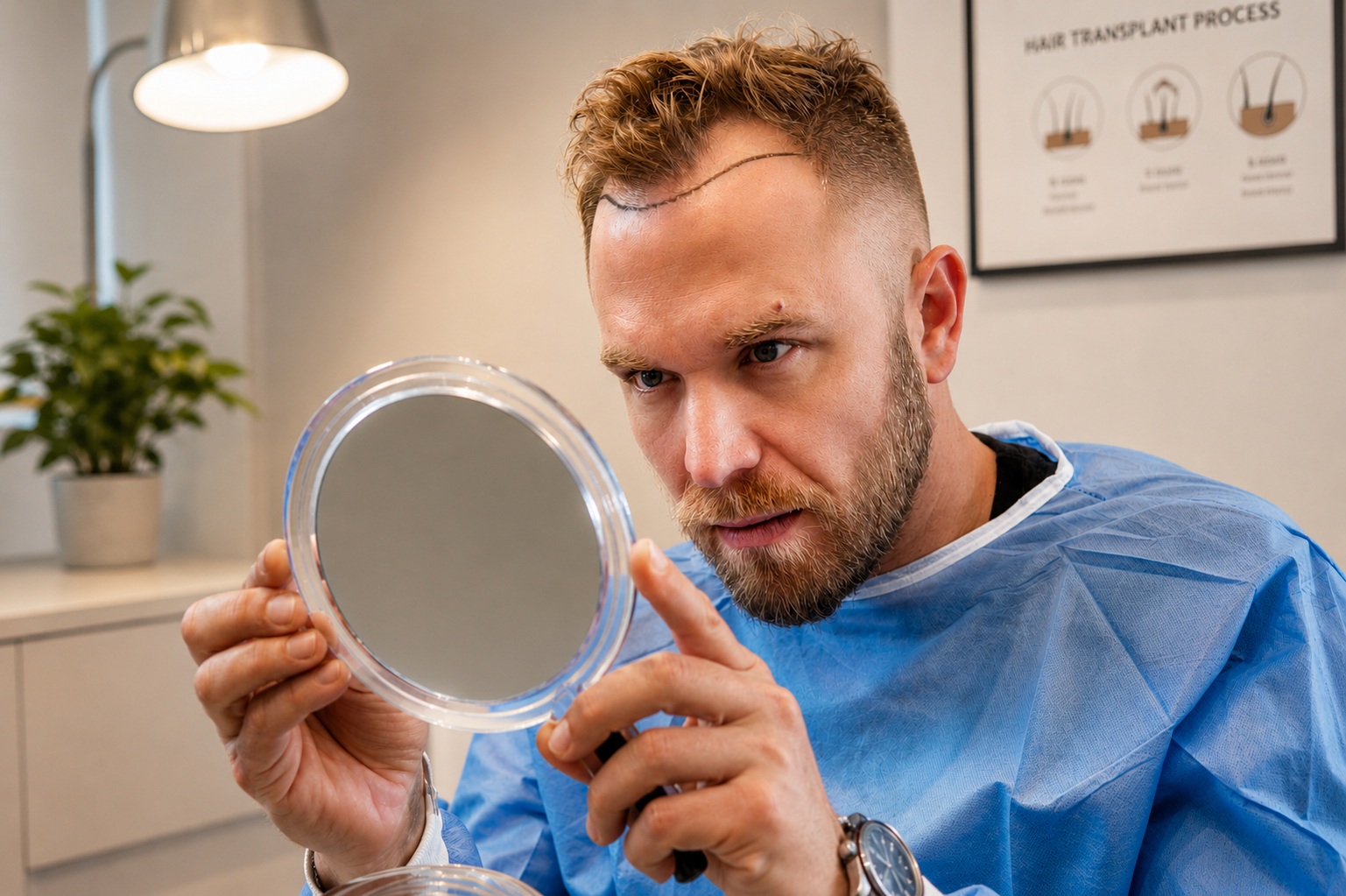
Alt text: Hair transplant consultation in a modern clinic, where a specialist examines a patient’s hairline while the patient looks into a handheld mirror to assess natural hair restoration results.
For many patients, this is the most exciting stage of the recovery process.
By months six to nine, most patients notice:
Significant density improvements
Stronger and thicker hair growth
Better scalp coverage
Improved hairline definition
Increased confidence
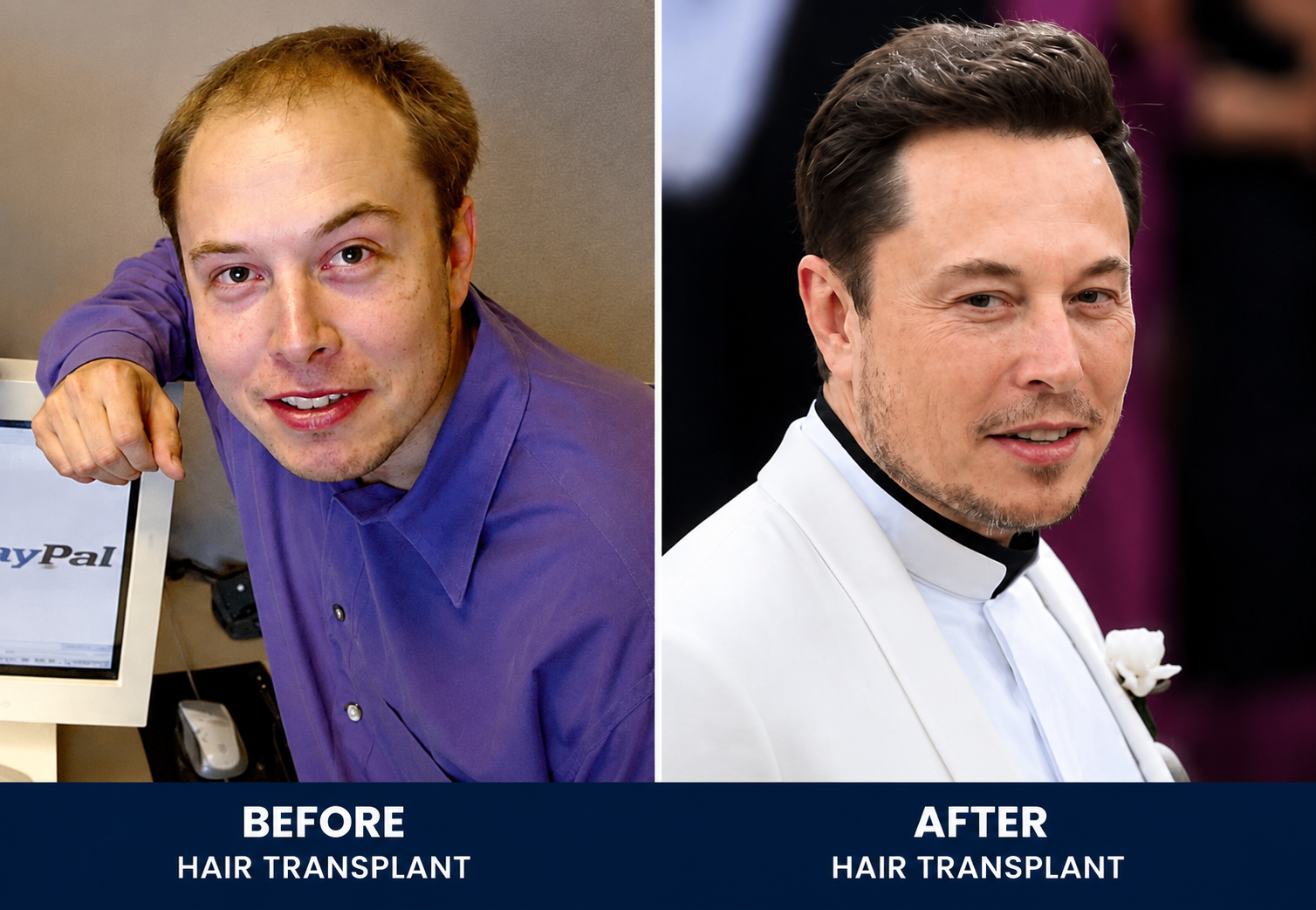
Some of the most impressive hair transplant turkey before and after transformations begin becoming visible during this period.
Although growth continues beyond this point, patients often start enjoying noticeable cosmetic improvements.
Months 9–12: Major Improvement
By the end of the first year, the majority of transplanted hairs have matured considerably.
Patients usually observe:
Fuller appearance
More natural texture
Increased density
Better blending with existing hair
Most patients are extremely satisfied with their appearance by this stage.
Months 12–18: Final Results
The final stage of the journey occurs between 12 and 18 months after treatment.
At this point, patients can fully appreciate their final:
Hairline design
Density
Coverage
Hair texture
Natural growth pattern
The most dramatic turkey hair transplant before and after transformations are typically visible during this period.
Factors That Affect Hair Transplant Results
Not all patients progress at exactly the same speed.
Several important factors can influence recovery and final outcomes.
Number of Grafts
Larger procedures involving more grafts may require additional time to fully mature.
Patients undergoing extensive restoration should expect gradual improvements over many months.
Hair Characteristics
Hair thickness, texture, curl pattern, and color contrast can all affect the visual appearance of density.
For example, thicker or curly hair often creates greater coverage with fewer grafts.
Age and Healing Capacity
Healthy patients of all ages can achieve excellent results. However, individual healing responses may vary from person to person.
Technique Used
Both DHI and FUE can produce outstanding outcomes when performed by experienced medical teams.
The most important factor is choosing the right technique for your specific hair loss pattern and treatment goals.
Hair Transplant Before and After Results by Month
Timeline | What to Expect |
Week 1 | Healing, redness, scabbing |
Weeks 2–4 | Temporary shedding (shock loss) |
Months 3–4 | Initial new growth |
Months 6–9 | Noticeable density improvement |
Months 9–12 | Significant transformation |
Months 12–18 | Final results |
Why Patience Matters
One of the biggest misconceptions about hair transplantation is expecting immediate results.
Hair follicles need time to recover, establish a blood supply, and enter a new growth cycle.
Patients who understand the recovery process are often more relaxed during the early months and better prepared for the gradual improvements that follow.
Remember: hair transplantation is a journey, not an overnight transformation.
Hair Transplant Turkey Before and After: What Makes a Great Result?
A successful hair transplant involves much more than density alone.
The best hair transplant turkey before and after results typically include:
- Natural hairline design
- Consistent density
- Proper graft distribution
- Natural growth angles
- Long-term planning
- Preservation of donor resources
When these elements come together, patients can enjoy natural-looking, long-lasting results that continue to grow for years.
Frequently Asked Questions
When Will I See Hair Transplant Results?
Most patients begin noticing new growth around months 3 to 4, while final results usually develop between 12 and 18 months.
Is Shock Loss Normal?
Yes. Temporary shedding is a completely normal stage of recovery and does not indicate graft failure.
Do All Hair Transplants Take 12 Months?
Most patients see significant improvement within 12 months, although some continue experiencing maturation for up to 18 months.
Do DHI and FUE Have Different Recovery Times?
Recovery is generally very similar for both techniques, although individual experiences may vary.
Can I Speed Up Hair Growth After a Hair Transplant?
Following aftercare instructions, maintaining a healthy lifestyle, eating a balanced diet, and attending follow-up appointments can help support optimal recovery.
Medical Disclaimer
This article is intended for educational purposes only and should not replace professional medical advice. Hair transplant techniques, eligibility, and expected outcomes vary depending on individual hair loss patterns, donor hair availability, and overall health. Always consult a qualified hair restoration specialist for a personalized assessment before proceeding with treatment.
Medical Sources & References
- International Society of Hair Restoration Surgery (ISHRS) – Hair Restoration Patient Resources
https://ishrs.org - American Hair Loss Association (AHLA) – Hair Loss & Hair Transplant Information
https://www.americanhairloss.org - American Academy of Dermatology (AAD) – Hair Loss: Diagnosis and Treatment
https://www.aad.org - National Health Service (NHS) – Cosmetic Procedures Overview
https://www.nhs.uk - European Hair Research Society (EHRS) – Hair Research and Clinical Guidance
https://ehrs.org