

Table of Contents
- What Are Dental Implants?
- Benefits of Dental Implants
- Who Is a Good Candidate?
- Types of Dental Implants
- Step-by-Step Implant Procedure
- Recovery Timeline
- Are Dental Implants Painful?
- Why Choose Turkey?
- How Long Do Dental Implants Last?
- Caring for Your Dental Implants
- Frequently Asked Questions
- Why Choose Novera Healthcare?
Dental Implants in Turkey: Everything You Need to Know
Missing teeth can affect much more than your smile. They can make eating uncomfortable, alter your speech, and impact your confidence. Dental implants offer a long-lasting, natural-looking solution, and Turkey has become one of the world’s leading destinations for this treatment.
Each year, thousands of patients from the UK, Europe, North America, and the Middle East travel to Turkey for high-quality dental care. Modern clinics, experienced dentists, advanced technology, and comprehensive patient support make it possible to receive excellent treatment while enjoying significant savings compared to many other countries.
In this guide, you’ll learn how dental implants work, who they’re suitable for, what the treatment journey looks like, and why so many international patients choose Turkey.
What Are Dental Implants?
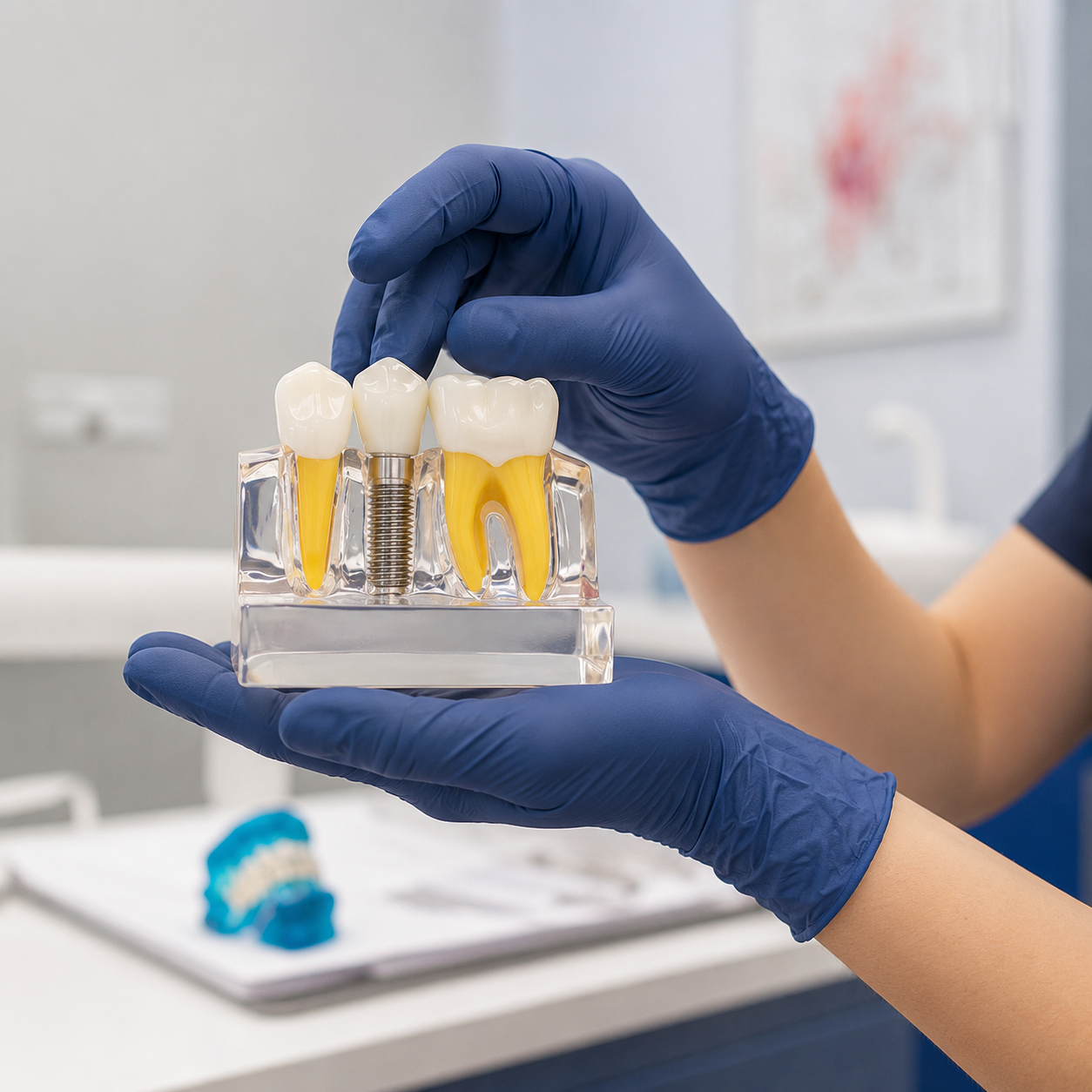
Dental implants are artificial tooth roots, typically made from medical-grade titanium or zirconia, that are surgically placed into the jawbone. Once the implant integrates with the bone through a natural healing process called osseointegration, it provides a stable foundation for a crown, bridge, or full-arch restoration.
Unlike removable dentures, implants are fixed in place and are designed to look, feel, and function like natural teeth.
A complete dental implant restoration usually includes:
- The implant post placed in the jawbone
- An abutment connecting the implant to the restoration
- A custom-made crown, bridge, or denture
The result is a secure, functional replacement that restores both appearance and chewing ability.
Why Choose Dental Implants?
Dental implants are considered the gold standard for replacing missing teeth because they offer several advantages over traditional bridges and dentures.
Natural Appearance
Each restoration is designed to match the colour, shape, and size of your surrounding teeth, creating a seamless smile.
Long-Term Durability
With proper care, dental implants can last for decades. Regular dental check-ups and good oral hygiene play an important role in maintaining their longevity.
Improved Comfort
Because implants are anchored into the jawbone, they eliminate the movement and discomfort often associated with removable dentures.
Better Oral Health
Unlike traditional bridges, implants do not require neighbouring healthy teeth to be altered. They also help stimulate the jawbone, reducing bone loss that can occur after tooth loss.
Restored Confidence
Many patients report feeling more confident speaking, eating, and smiling after treatment.
Who Is a Good Candidate for Dental Implants?
Dental implants may be suitable if you:
- Have one or more missing teeth
- Have healthy gums
- Have sufficient jawbone to support an implant, or are eligible for bone grafting
- Are in good general health
- Do not smoke heavily, or are willing to stop during healing
- Are committed to maintaining good oral hygiene
Age is generally not a limiting factor. Suitability depends more on overall health and bone quality than on age alone.
A comprehensive consultation, including digital imaging, is essential to determine the most appropriate treatment plan.
Types of Dental Implants
Single Tooth Implant
Ideal for replacing one missing tooth without affecting neighbouring teeth.
Multiple Dental Implants
Several implants can support multiple missing teeth or a dental bridge.
Full Mouth Dental Implants
Patients missing all or most of their teeth may benefit from a full-mouth restoration using strategically placed implants.
All-on-4 Dental Implants
This technique uses four carefully positioned implants to support a full arch of teeth. It can reduce treatment time and may avoid the need for extensive bone grafting in some cases.
What Does the Dental Implant Procedure Involve?
Your journey begins with a comprehensive assessment. This may include:
Medical history review
Oral examination
Digital X-rays
3D CBCT scan
Discussion of your goals and expectations
A personalised treatment plan is then created.
2. Implant Placement
Under local anaesthesia or conscious sedation, the implant is placed into the jawbone through a carefully planned surgical procedure.
Most patients report that the procedure is more comfortable than they expected.
3. Healing Period
Over the following months, the implant gradually bonds with the jawbone. This process creates the stability needed to support the final restoration.
Temporary restorations may be provided where appropriate.
4. Final Restoration
Once healing is complete, your custom-made crown, bridge, or full-arch prosthesis is securely attached to the implant.
The result is a functional, natural-looking smile designed specifically for you.
Dental Implant Recovery Timeline
Recovery experiences vary between individuals, but many patients return to normal daily activities within a few days.
First 24 Hours
- Mild swelling
- Minor bleeding
- Soft foods recommended
Days 2–7
- Swelling gradually reduces
- Most discomfort is manageable with prescribed medication
- Gentle oral hygiene is encouraged
Weeks 2–8
- Healing continues beneath the surface
- Regular follow-up appointments may be scheduled
Several Months
- Osseointegration is completed
- Permanent restoration is placed
Following your dentist’s aftercare instructions is essential for successful healing.
Are Dental Implants Painful?
One of the most common concerns is whether implant treatment is painful.
The procedure itself is performed under local anaesthesia, meaning you should not feel pain during surgery. After treatment, mild soreness or swelling is common for a few days but is generally manageable with medication recommended by your dental team.
Many patients compare the recovery to having a tooth extracted.
Why Choose Turkey for Dental Implants?

Turkey has become one of the world’s leading destinations for dental tourism thanks to several factors.
Experienced Dental Professionals
Many Turkish dentists have extensive experience treating international patients and regularly undertake advanced professional training.
Modern Technology
Leading clinics use digital smile design, CBCT imaging, CAD/CAM systems, and advanced sterilisation protocols to support accurate diagnosis and treatment planning.
Comprehensive Patient Support
Many international patients benefit from assistance with airport transfers, accommodation arrangements, treatment coordination, and multilingual support throughout their journey.
Excellent Value
The overall cost of treatment is often lower than in many Western countries due to economic factors such as operating costs and exchange rates—not necessarily because of lower standards of care.
Patients should always compare clinics based on qualifications, experience, treatment planning, and transparency, rather than price alone.
How Long Do Dental Implants Last?
Dental implants are designed as a long-term solution.
With good oral hygiene, regular professional cleanings, and routine dental examinations, implants can remain healthy for many years. While the crown attached to the implant may eventually require replacement due to normal wear, the implant itself often continues to function successfully for decades.
Caring for Your Dental Implants
Maintaining your implants is similar to caring for natural teeth.
Daily care includes:
- Brushing twice a day
- Cleaning between teeth using floss or interdental brushes
- Using recommended oral hygiene products
- Attending regular dental check-ups
- Avoiding smoking where possible
- Wearing a night guard if you grind your teeth
Consistent aftercare helps support the long-term success of your treatment.
Frequently Asked Questions
Can I replace all my teeth with dental implants?
Yes. Full-mouth implant solutions, including All-on-4 and All-on-6 treatments, can restore an entire arch of missing teeth.
How long will I need to stay in Turkey?
The required stay depends on your treatment plan. Some procedures involve two visits separated by a healing period, while others may be completed using immediate-loading techniques when clinically appropriate.
Am I too old for dental implants?
There is no strict upper age limit. Overall health and bone quality are generally more important than age.
Can smokers receive dental implants?
Smoking can increase the risk of complications and slow healing. Your dentist will discuss how smoking may affect your treatment and advise you on the best approach.
Are dental implants safe?
Dental implants have been used successfully for decades and are supported by extensive clinical research. Careful treatment planning and ongoing aftercare contribute to predictable outcomes.
Why Choose Novera Healthcare?
At Novera Healthcare, we understand that travelling abroad for dental treatment is a significant decision. That’s why we focus on providing a personalised, transparent experience from your first enquiry through to your aftercare.
We work with experienced dental professionals who use modern diagnostic technology and evidence-based treatment planning. Every patient receives an individual assessment, ensuring recommendations are based on their clinical needs rather than a one-size-fits-all approach.
Our international patient coordinators are here to help with every stage of your journey, including communication, travel planning, and ongoing support, so you can feel informed and confident throughout your treatment.
Final Thoughts
Dental implants are one of the most effective ways to restore missing teeth, improve oral function, and rebuild confidence. Turkey has earned a strong international reputation for delivering high-quality dental care, supported by modern facilities, experienced professionals, and patient-focused services.
If you’re considering dental implants in Turkey, choosing a trusted provider is just as important as choosing the treatment itself. By understanding the procedure, asking the right questions, and working with an experienced team, you can make an informed decision and take the first step toward a healthier, more confident smile.
Medical Disclaimer
The information provided in this article is intended for educational purposes only and should not be considered medical advice. Every patient is unique, and treatment recommendations vary depending on individual circumstances. Always consult a qualified healthcare professional for a personalised assessment and treatment plan.
Sources & References
- American Dental Association (ADA)
- International Team for Implantology (ITI)
- European Association for Osseointegration (EAO)
- National Health Service (NHS)
- World Health Organization (WHO)