Afro Hair Transplant in Turkey
An Afro hair transplant in Turkey is a highly specialized hair restoration procedure designed for patients with Afro-textured, coily, curly, or tightly curled hair. Unlike straight hair types, Afro follicles naturally curve beneath the scalp, requiring advanced extraction techniques and meticulous implantation planning.
For this reason, successful Afro hair transplant Turkey procedures depend not only on the chosen technique but also on the experience of the surgical team in treating textured hair.
Today, many international patients choose Afro hair transplant in Turkey because of its combination of specialized expertise, advanced technology, and cost-effective treatment options.
- Afro Hair Transplant in Turkey
- What Makes Afro Hair Different?
- Understanding Afro Hair Types
- Common Reasons Patients Seek Afro Hair Transplantation
- Afro Hair Transplant Techniques
- Afro Hairline Design
- How Many Grafts Do You Need?
- Who Is a Good Candidate?
- Afro Hair Transplant Recovery Timeline
- Afro Hair Transplant Cost in Turkey
- Why Choose Turkey for Afro Hair Transplant?
- Frequently Asked Questions
What Makes Afro Hair Different?
One of the most important factors in an Afro hair transplant is understanding the structure of Afro-textured follicles.
While Afro hair appears curly above the scalp, the follicle itself is also curved beneath the skin. This creates unique surgical challenges during both extraction and implantation.
Key characteristics include:
Curved follicle structure
Higher risk of graft transection
Unique growth angles
Greater visual density
Specialized implantation requirements
These characteristics are the reason why textured hair transplantation should always be performed by teams experienced in Afro hair restoration.
Understanding Afro Hair Types
Afro-textured hair can vary significantly from one patient to another.
Common classifications include:
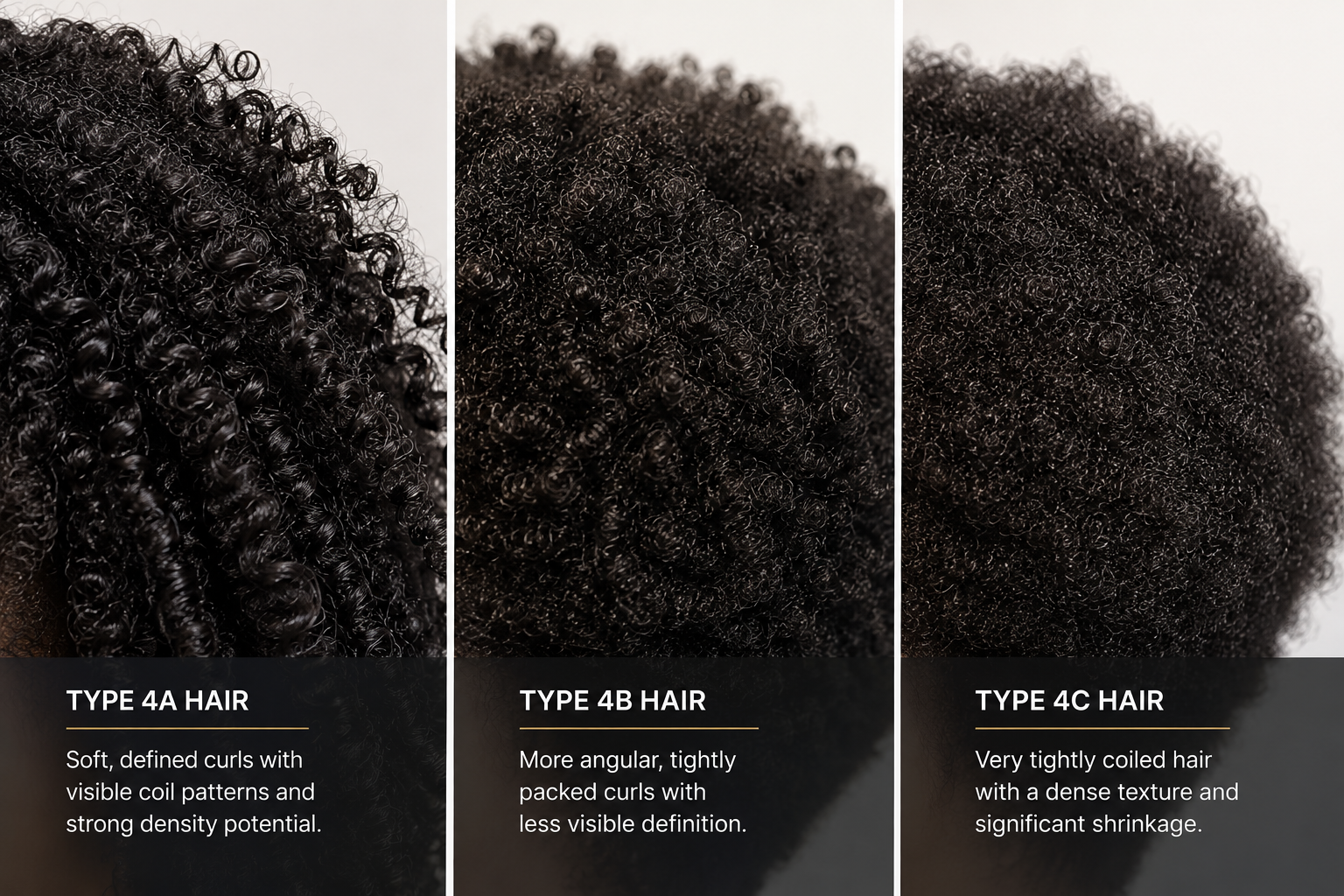
Type 4A Hair
Soft, defined curls with visible coil patterns and strong density potential.
Type 4B Hair
More angular, tightly packed curls with less visible definition.
Type 4C Hair
Very tightly coiled hair with a dense texture and significant shrinkage.
Understanding the curl pattern helps determine the optimal extraction strategy, implantation angles, and density planning.
Common Reasons Patients Seek Afro Hair Transplantation
Patients may consider an Afro hair transplant in Turkey for several reasons, including:
- Receding hairline
- Temple recession
- Crown thinning
- Male pattern baldness
- Female pattern hair loss
- Traction alopecia
- Previous transplant correction
- Beard restoration
- Eyebrow restoration
Both hair transplant for black men and hair transplant for black women can be customized according to individual hair loss patterns and aesthetic goals.
Afro Hair Transplant Techniques
Modern Afro hair transplant Turkey procedures are commonly performed using FUE and DHI techniques.
FUE Hair Transplant for Afro Hair
FUE involves extracting individual follicular units from the donor area and implanting them into thinning or bald regions.
For Afro-textured hair, extraction requires careful adjustment of punch size, angle, and technique to follow the natural curvature of the follicle.
Benefits of FUE include:
No linear scar
Natural-looking results
Excellent preservation of the donor area
Suitable for larger treatment areas
DHI Hair Transplant for Afro Hair
DHI allows direct implantation using a specialized implanter pen.
Many patients choose DHI when focusing on:
Hairline restoration
Temple reconstruction
Achieving higher density
Precise graft placement
Because implantation angles can be controlled more precisely, DHI can be particularly effective in preserving the natural curl pattern and direction.
Afro Hairline Design
Hairline design is one of the most important aspects of an Afro hair transplant in Turkey.
A successful hairline should:
Respect natural facial proportions
Follow ethnic hairline characteristics
Preserve long-term donor resources
Create a natural transition zone
For women, softer and more rounded hairlines are often preferred. For men, stronger temple points and more defined frontal designs may be appropriate, depending on individual goals.
How Many Grafts Do You Need?
The number of grafts required depends on several factors, including:
The severity of hair loss
The treatment area
The desired density
The curl pattern
The quality of the donor area
Typical Graft Requirements
Treatment Area | Average Grafts |
Hairline Restoration | 800–1,500 |
Temple Restoration | 600–1,200 |
Frontal Area | 1,500–2,500 |
Crown Restoration | 1,200–2,000 |
Full Coverage | 2,500–3,500 |
Because Afro hair provides greater visual coverage, many patients require fewer grafts than individuals with straight hair.
Who Is a Good Candidate?
You may be a suitable candidate if you:
- Have stable hair loss
- Possess a healthy donor area
- Have realistic expectations
- Are in good general health
- Are seeking a long-term hair restoration solution
Patients experiencing traction alopecia often achieve particularly rewarding results once the hair loss has stabilized.
Afro Hair Transplant Recovery Timeline
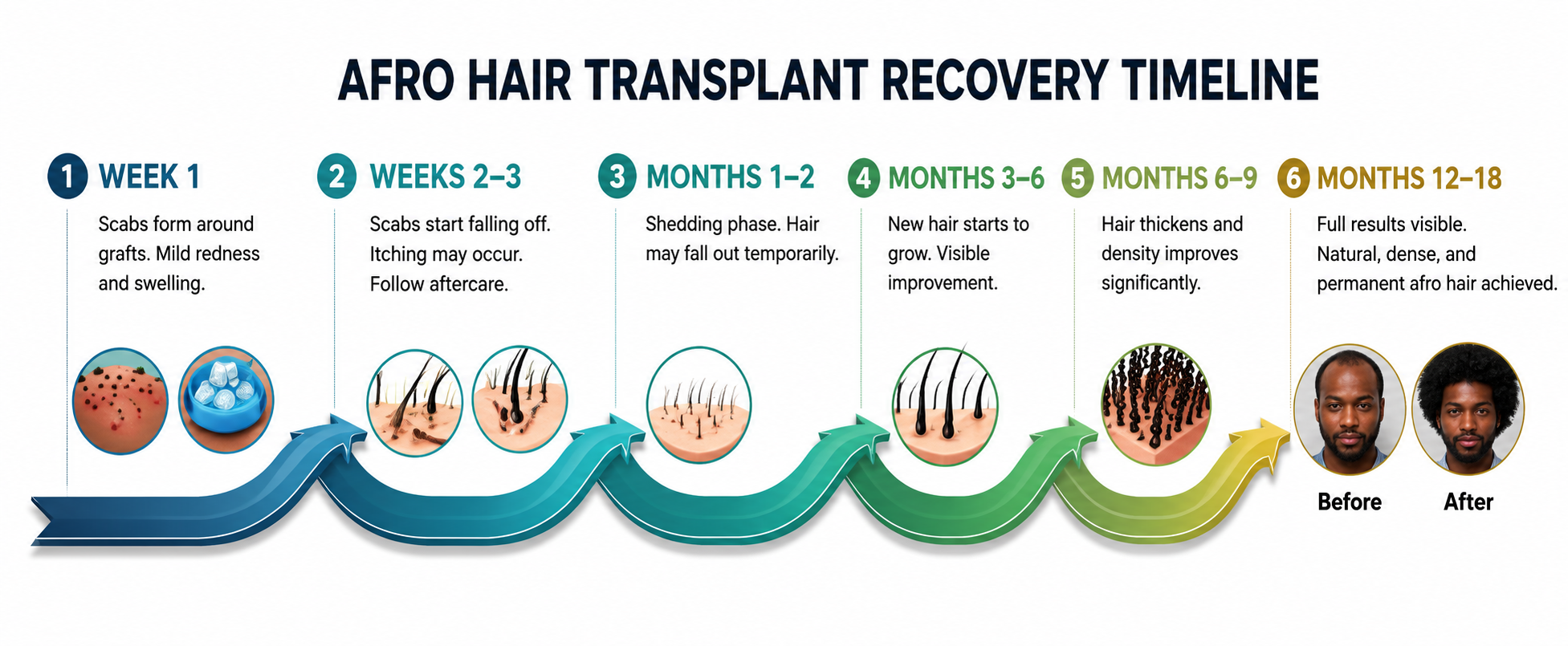
Recovery following an Afro hair transplant Turkey procedure typically follows a predictable pattern.
Week 1
Mild swelling and redness
Scab formation
Early healing
Weeks 2–6
Temporary shedding (shock loss)
Hair follicles enter a resting phase
Months 3–4
New hair growth begins
Months 6–9
Noticeable improvements in density become visible
Months 12–18
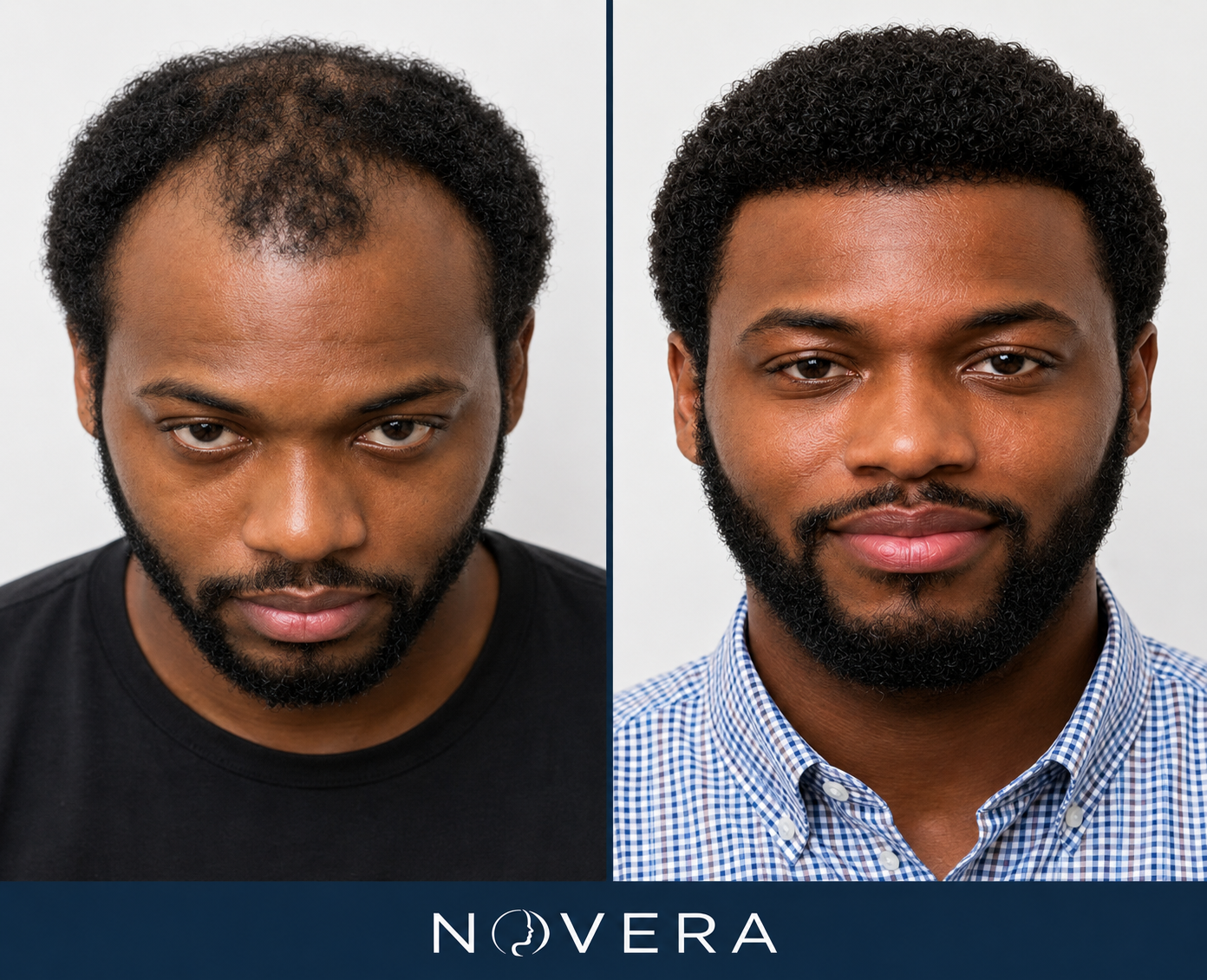
Final Afro hair transplant before and after results develop
The natural curl pattern fully matures
Maximum density becomes visible
Afro Hair Transplant Cost in Turkey
The Afro hair transplant cost Turkey depends on several factors, including:
- The number of grafts required
- The treatment technique used
- Donor area quality
- The severity of hair loss
- Package inclusions
Compared with the UK, the USA, and many European countries, Turkey continues to offer highly competitive pricing while providing access to experienced medical teams and comprehensive patient support services.
Why Choose Turkey for Afro Hair Transplant?
Turkey has become a leading destination for Afro hair transplant in Turkey procedures because of its:
- Specialized surgical expertise
- Advanced FUE and DHI techniques
- Competitive pricing
- Comprehensive patient packages
- Dedicated international patient coordinators
- High patient satisfaction rates
For patients seeking natural density, preserved curl patterns, and long-term results, an Afro hair transplant Turkey procedure can provide a highly effective and permanent solution.
Frequently Asked Questions
Because Afro follicles naturally curve beneath the scalp, extraction and implantation require specialized techniques. Standard approaches designed for straight hair may increase the risk of graft damage.
Yes. The curl pattern is determined by the follicle itself. Once transplanted, the hair continues to grow with the same natural texture and curl characteristics as the donor area.
Common reasons include:
High graft transection rates
Improper implantation angles
Poor graft handling
Inexperienced surgical teams
Choosing an experienced clinic is critical to achieving optimal Afro hair transplant results.
Yes. Temple restoration is one of the most common procedures for Black men experiencing hairline recession or temple thinning.
Yes. Once traction alopecia has stabilized, many women can achieve excellent results through hair transplantation.
Yes. Curl pattern influences extraction techniques, implantation angles, and overall treatment planning. Tighter curl patterns generally require more specialized handling.
Patients with a personal or family history of keloid formation should discuss this during the consultation so that appropriate precautions can be taken.
Patients should avoid hairstyles that place tension on the transplanted area during recovery. Your medical team will provide personalized recommendations based on your healing progress.
After healing, patients are generally advised to:
Use gentle, sulfate-free shampoos
Avoid excessive heat styling
Keep the scalp moisturized
Limit chemical treatments during recovery
Avoid tight hairstyles that create tension
When performed by experienced surgeons who understand textured hair, Afro hair transplantation can produce highly natural-looking results while preserving both density and the natural curl pattern.
