Beard Transplant in Turkey
A beard transplant in Turkey is a permanent facial hair restoration procedure designed to increase beard density, fill patchy areas, and create a fuller, more defined beard.
Whether facial hair loss is caused by genetics, scarring, trauma, or uneven growth patterns, a beard transplant in Turkey can provide natural-looking, long-lasting results using your own hair follicles.
Today, thousands of international patients choose beard transplant procedures in Turkey because of the country’s experienced medical teams, advanced FUE and DHI techniques, and competitive pricing compared with Europe and North America.
- Beard Transplant in Turkey: Overview
- What Is a Beard Transplant?
- Who Is a Good Candidate for a Beard Transplant?
- Common Reasons Patients Choose Beard Transplantation
- Beard Transplant Procedure Step by Step
- Beard Transplant Techniques
- Beard Design & Facial Harmony
- How Many Grafts Are Needed for a Beard Transplant?
- Beard Transplant Before and After Results
- Beard Transplant Recovery Timeline
- Beard Transplant Aftercare
- Beard Transplant Cost in Turkey
- Why Choose Turkey for a Beard Transplant?
- How to Choose the Best Beard Transplant Clinic in Turkey
- Frequently Asked Questions
What Is a Beard Transplant?
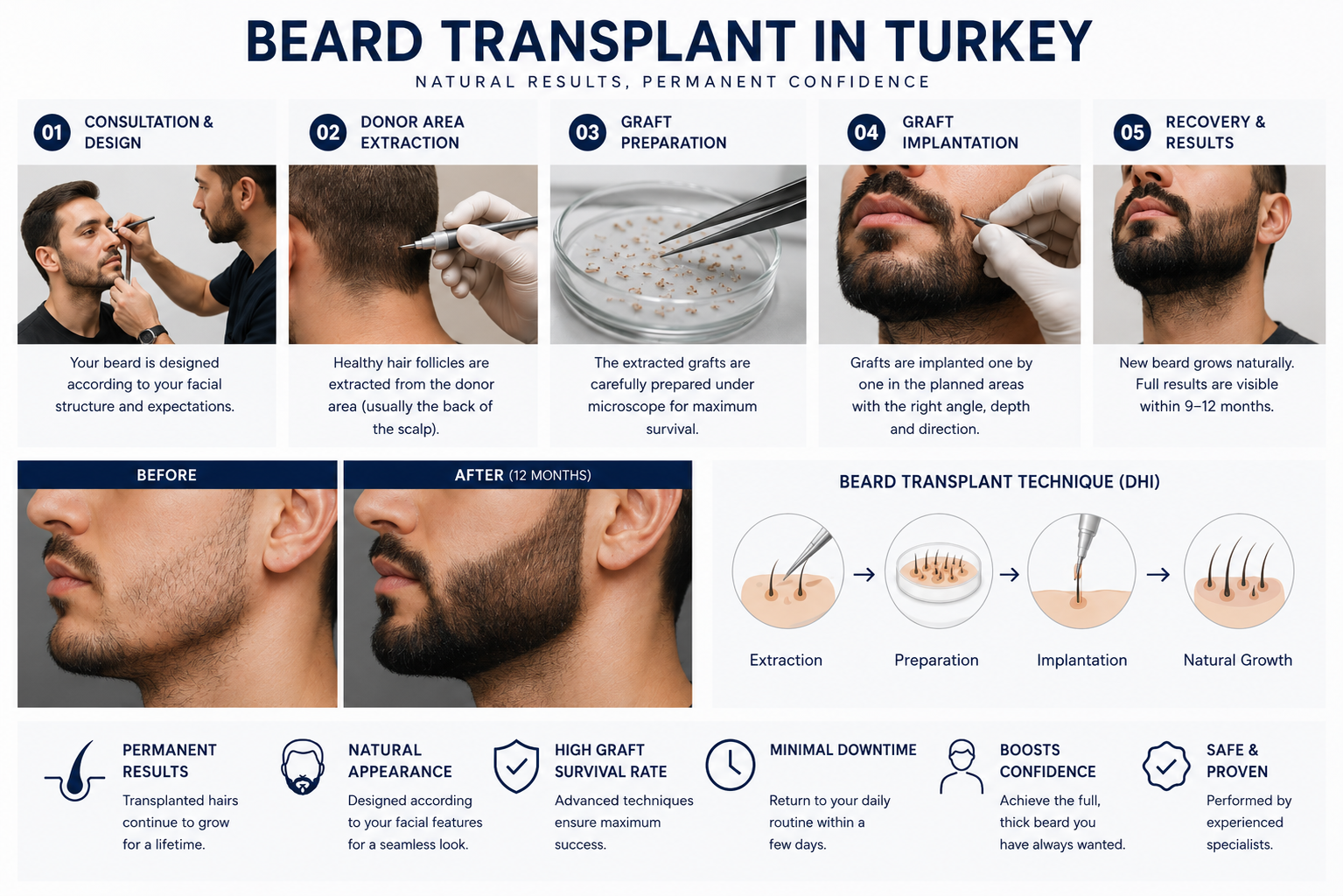
A beard transplant in Turkey involves extracting healthy hair follicles from a donor area, typically the back of the scalp, and implanting them into areas with patchy, thin, or absent facial hair.
Each graft is carefully implanted according to the natural growth angle and direction of facial hair to create realistic and aesthetically balanced results.
Unlike temporary solutions, transplanted follicles continue growing permanently.
Who Is a Good Candidate?
A beard hair transplant Turkey procedure may be suitable for patients who:
- Have patchy beard growth
- Have naturally low beard density
- Want a fuller beard appearance
- Have facial scars with missing hair
- Have uneven beard growth patterns
- Want to enhance sideburns, mustaches, or goatees
- Have sufficient donor hair
Common Reasons Patients Seek Beard Transplantation
Patchy Beard Growth
One of the most common reasons patients seek a beard transplant Turkey procedure is uneven or patchy facial hair growth caused by genetics.
Low Beard Density
Many patients have facial hair but wish to increase overall beard density and achieve a fuller appearance.
Scar Camouflage
Hair transplantation can often restore beard growth in areas affected by acne scars, surgical scars, burns, or injuries.
Mustache Enhancement
Some patients seek treatment specifically to improve mustache density and definition.
Goatee Restoration
A beard transplant can also be used to create or strengthen the goatee area.
Sideburn Reconstruction
Patients with sparse or missing sideburns can achieve a more balanced facial appearance through facial hair transplantation.
Beard Transplant Procedure Step by Step
A beard transplant is a carefully planned procedure designed to create a fuller, natural-looking beard that complements the patient’s facial features. Every step is customized according to the desired beard style, density, and facial structure.
Beard Transplant Techniques
FUE Beard Transplant
FUE (Follicular Unit Extraction) remains one of the most popular techniques for facial hair transplant Turkey procedures.
Benefits include:
No linear scar
Natural-looking results
Excellent donor area preservation
Suitable for larger beard restoration procedures
DHI Beard Transplant
DHI (Direct Hair Implantation) allows follicles to be implanted directly into the beard area using specialized implantation tools.
Benefits include:
Precise angle control
High-density implantation
Natural beard contours
Improved facial hair design
Because beard hairs grow in multiple directions across the face, implantation precision is particularly important.
Beard Design & Facial Harmony
A successful beard transplant in Turkey involves more than simply adding hair.
The beard should complement:
- Facial proportions
- Jawline structure
- Chin shape
- Existing facial hair
- Ethnic characteristics
- Personal style preferences
Every treatment plan should be customized according to the patient’s desired appearance and long-term goals.
How Many Grafts Are Needed?
The number of grafts required depends on the treatment area and the desired density.
Treatment Area | Average Grafts |
Mustache Enhancement | 300–600 |
Goatee Restoration | 400–800 |
Sideburn Restoration | 300–700 |
Partial Beard Filling | 800–1,500 |
Full Beard Reconstruction | 2,000–3,500 |
The exact graft count is determined during the consultation.
Beard Transplant Before and After Results
One of the most important factors when choosing a clinic is reviewing genuine beard transplant before and after results.
Successful outcomes should demonstrate:
- Natural beard direction
- Balanced density
- Consistent growth patterns
- Symmetrical facial framing
- Long-term graft survival
Most patients begin to see noticeable improvements between 6 and 9 months. Final results typically develop between 12 and 18 months.
Beard Transplant Recovery Timeline
Week 1
Mild redness and swelling
Small scabs around the grafts
Initial healing
Weeks 2–6
Temporary shedding (shock loss)
Hair follicles enter a resting phase
Months 3–4
New beard growth begins
Months 6–9
Significant improvements in beard density become visible
Months 12–18
Final beard transplant results develop
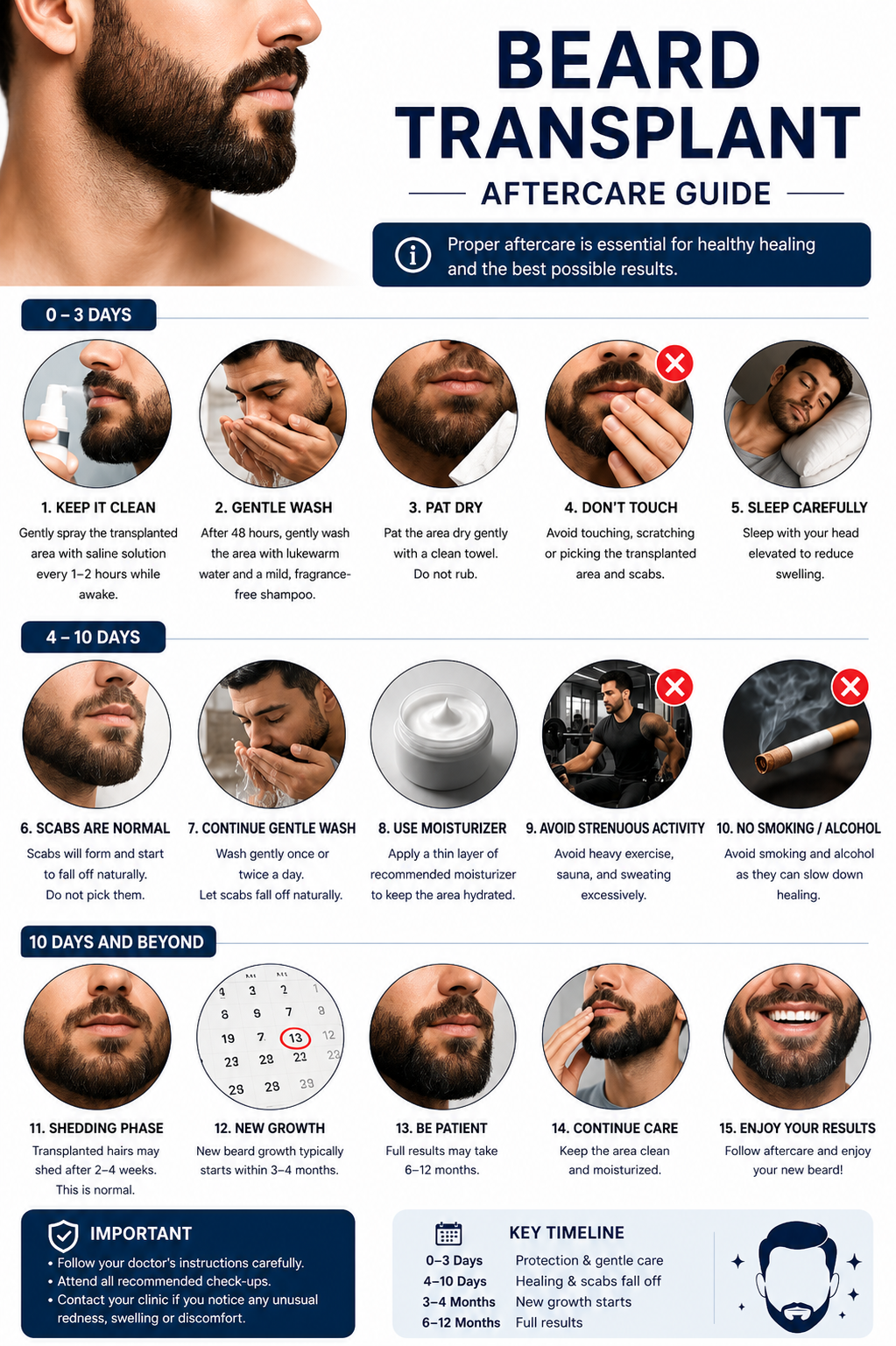
Beard Transplant Aftercare
Proper aftercare is essential for protecting the transplanted grafts and supporting healthy beard growth. Mild redness, swelling, and small scabs are normal during the first few days and usually improve without treatment.
To support healing, patients should:
- Avoid touching or rubbing the treated area.
- Follow the clinic’s washing instructions carefully.
- Avoid strenuous exercise for about one week.
- Stay away from swimming pools, saunas, and direct sunlight during early healing.
- Avoid shaving until approved by the surgeon.
Following the recommended aftercare instructions helps maximize graft survival and supports natural, long-lasting beard transplant results.
Beard Transplant Cost in Turkey
The beard transplant cost Turkey depends on several factors, including:
- The number of grafts required
- The treatment technique used
- The complexity of beard design
- Donor area quality
- Package inclusions
Compared with the USA, the UK, and many European countries, Turkey continues to offer competitive pricing while maintaining advanced medical standards and comprehensive patient support.
Why Choose Turkey for Beard Transplant?
Turkey has become a leading destination for beard transplant in Turkey procedures because of:
- Experienced hair restoration specialists
- Advanced FUE and DHI techniques
- Competitive pricing
- Comprehensive patient packages
- Dedicated international patient coordinators
- High patient satisfaction rates
For many international patients, Turkey offers an opportunity to achieve a fuller beard, improve facial definition, and enjoy natural-looking, long-lasting results.
How to Choose the Best Beard Transplant Clinic in Turkey
Choosing the right clinic plays an important role in achieving natural-looking beard transplant results. Since facial hair grows in different directions across the cheeks, jawline, and mustache, precision and experience are essential.
When comparing clinics, consider:
- The surgeon’s experience with beard transplantation
- Before and after patient results
- Advanced techniques such as FUE and DHI
- Verified patient reviews
- Transparent pricing and treatment plans
- International patient support
Selecting a reputable clinic with experienced specialists can help ensure natural beard density, high graft survival, and long-lasting results.
Frequently Asked Questions
Yes. Transplanted follicles are taken from genetically stable donor areas and continue growing permanently after transplantation.
Most patients require between 1,000 and 3,500 grafts, depending on beard size, density goals, and the treatment area.
When grafts are implanted at the correct angle and direction, beard transplantation can produce highly natural-looking results.
The procedure is performed under local anesthesia and is generally well tolerated by most patients.
Yes. Beard transplantation is commonly used to restore facial hair growth in scarred areas.
New growth typically begins around months 3–4, while final results usually develop between 12 and 18 months.
Yes. Once healing is complete and the grafts are fully established, patients can trim, shave, and style their beard normally.
Absolutely. Beard transplants can target specific areas such as the mustache, goatee, sideburns, or cheeks.
The cost of a beard transplant in Turkey varies depending on the number of grafts required, the technique used, and package inclusions. Turkey remains one of the most affordable destinations for high-quality facial hair restoration.
