
Table of Contents
- What Is Shock Loss?
- Is Shock Loss Normal After a Hair Transplant?
- When Does Shock Loss Start?
- Why Does Shock Loss Happen?
- What Causes Shock Loss?
- Surgical Trauma
- Temporary Reduction in Blood Supply
- Inflammation
- Individual Healing Response
- Can Native Hair Experience Shock Loss?
- How Long Does Shock Loss Last?
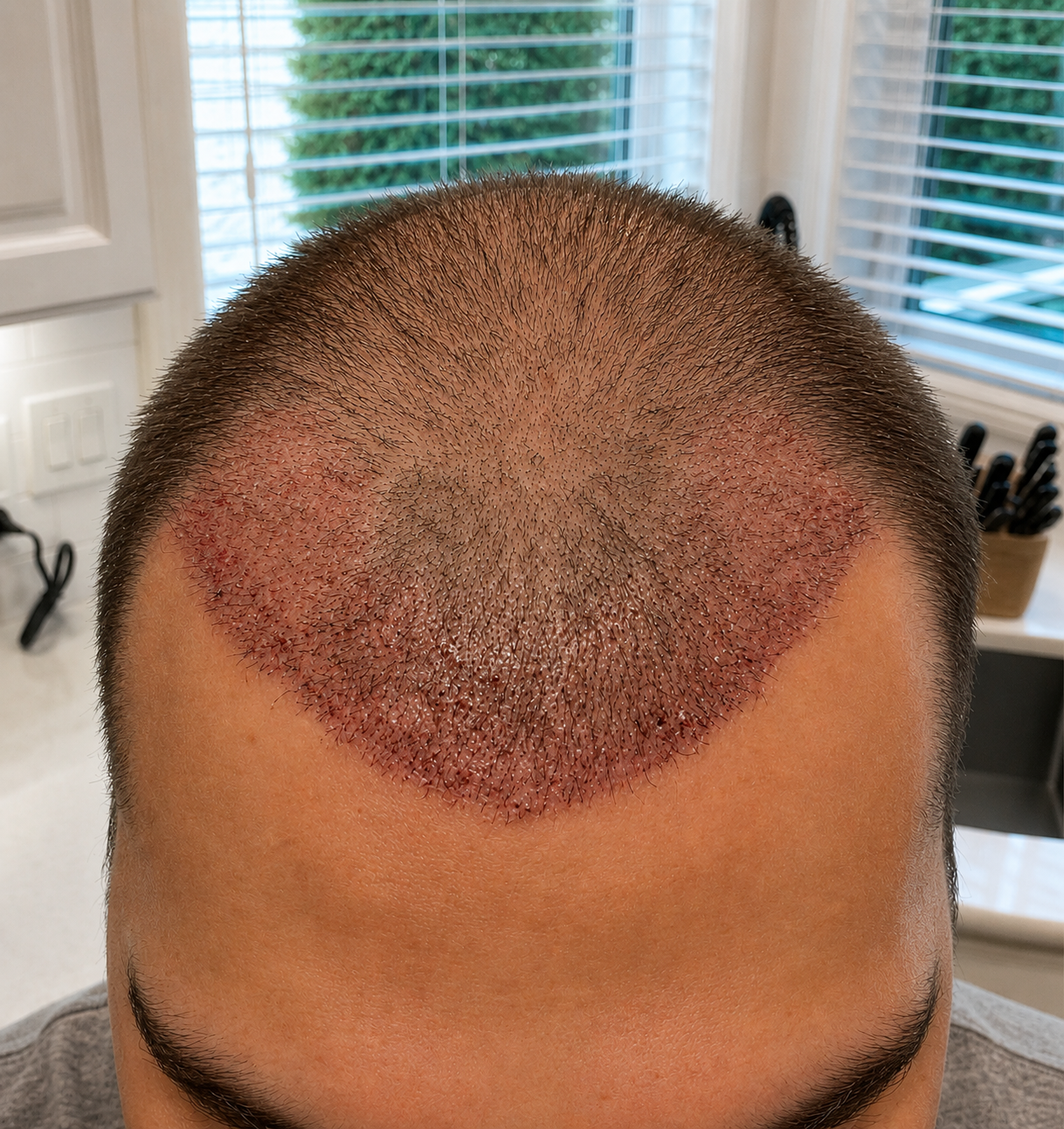
- What Does Shock Loss Look Like?
- Can Shock Loss Be Prevented?
- When Should You Be Concerned?
- Does Shock Loss Mean My Hair Transplant Failed?
- What Is Shock Loss? Final Thoughts
- Frequently Asked Questions
One of the most alarming moments for many patients occurs a few weeks after their hair transplant when newly transplanted hairs suddenly begin to fall out.
Naturally, this often leads to panic and questions such as:
“Have my grafts failed?”
“Is my hair transplant unsuccessful?”
The good news is that, in most cases, this shedding is completely normal.
This process is known as shock loss, and it is considered a routine part of hair transplant recovery.
Understanding why shock loss occurs can help patients feel reassured and better prepared for the recovery journey.
What Is Shock Loss?
Shock loss refers to temporary hair shedding that occurs after a hair transplant procedure.
Both transplanted hairs and existing native hairs may enter a temporary resting phase as a response to surgical stress.
Although the visible hair shafts fall out, the follicles themselves usually remain healthy beneath the scalp.
Once the follicles recover, new hair growth gradually resumes.
Is Shock Loss Normal After a Hair Transplant?
Yes.
Shock loss is one of the most common and expected stages of recovery.
In fact, most patients experience some degree of shedding during the first few weeks following treatment.
Experiencing shock loss does not mean that:
- The grafts have failed
- The procedure was unsuccessful
- Permanent hair loss has occurred
In the vast majority of cases, new growth will begin within a few months.
When Does Shock Loss Start?
Shock loss usually begins between:
2 to 8 weeks after surgery
The exact timing varies from patient to patient.
Some individuals experience only mild shedding, while others notice more significant hair loss.
Both experiences are considered normal.
Why Does Shock Loss Happen?
Hair transplantation involves extracting and implanting hair follicles.
Although modern techniques such as FUE and DHI are minimally invasive, the procedure still places temporary stress on the scalp and follicles.
As part of the natural healing process, transplanted follicles often enter the resting phase of the hair growth cycle.
This temporary pause allows the follicles to recover before producing new hair.
What Causes Shock Loss?
Several factors may contribute to shock loss:
Surgical Trauma
The transplantation process itself can temporarily disturb the normal hair cycle.
Temporary Reduction in Blood Supply
Immediately after surgery, newly transplanted follicles require time to establish a stable blood supply.
Inflammation
Mild inflammation following surgery can temporarily influence surrounding hair follicles.
Individual Healing Response
Every patient heals differently, and recovery patterns vary considerably.
Can Native Hair Experience Shock Loss?
Yes.
Shock loss may affect not only transplanted hairs but also pre-existing native hair.
This is particularly common in patients who still have thinning hair in the recipient area.
Native hair usually regrows once recovery is complete.
However, patients with advanced miniaturization may occasionally experience more persistent thinning.
How Long Does Shock Loss Last?
In most cases, shock loss is temporary.
Typical recovery follows this timeline:
Weeks 2–8
Temporary shedding occurs.
Months 3–4
Early new growth begins.
Months 6–9
Noticeable improvements in density become visible.
Months 12–18
Final hair transplant results develop.
Patience is essential during this period.
What Does Shock Loss Look Like?
Patients experiencing shock loss may notice:
- Sudden shedding of transplanted hairs
- Temporary reduction in density
- Uneven appearance
- Visible scalp in treated areas
Because new hairs have not yet emerged, many patients temporarily feel that they look worse before they look better.
This stage is entirely normal.
Can Shock Loss Be Prevented?
Completely preventing shock loss is not always possible.
However, several measures may help support optimal recovery:
- Following post-operative instructions carefully
- Avoiding trauma to the scalp
- Taking prescribed medications
- Avoiding smoking
- Maintaining a healthy lifestyle
- Attending follow-up appointments
Careful aftercare can help maximize graft survival.
When Should You Be Concerned?
Although shock loss is normal, patients should contact their clinic if they experience:
- Severe pain
- Excessive bleeding
- Signs of infection
- Persistent swelling
- Unusual scalp discharge
Maintaining communication with your medical team is important throughout recovery.
Does Shock Loss Mean My Hair Transplant Failed?
Absolutely not.
This is perhaps the most important message patients need to hear.
Shock loss is usually a positive sign that transplanted follicles are progressing through their natural growth cycle.
The follicles remain alive beneath the scalp and will typically begin producing new hair within several months.
Patience and realistic expectations are key.
What Is Shock Loss? Final Thoughts
Shock loss can be emotionally challenging, especially for patients who are unfamiliar with the recovery process.
Fortunately, temporary shedding is a normal and expected stage following hair transplantation.
Understanding the recovery timeline helps patients remain confident and avoid unnecessary stress during the early months after surgery.
For most patients, the shedding phase is simply the beginning of a successful hair restoration journey.
Frequently Asked Questions
Is shock loss permanent?
No. In most cases, shock loss is temporary and new growth begins within a few months.
When does shock loss start?
Shock loss usually begins between two and eight weeks after surgery.
Does everyone experience shock loss?
Most patients experience some degree of shedding, although the severity varies.
Can native hair fall out because of shock loss?
Yes. Existing native hair may temporarily shed as part of the recovery process.
How long does shock loss last?
Most patients begin seeing new growth between months three and four following treatment.
Medical Disclaimer
This article is intended for educational purposes only and should not replace professional medical advice. Hair transplant outcomes, longevity, and long-term maintenance vary depending on individual factors such as genetics, donor hair quality, age, overall health, and ongoing hair loss progression. Always consult a qualified hair restoration specialist for a personalized evaluation and treatment plan.
Medical Sources & References
- International Society of Hair Restoration Surgery (ISHRS)
Hair Restoration Patient Resources
https://ishrs.org - American Hair Loss Association (AHLA)
Hair Loss & Hair Transplant Information
https://www.americanhairloss.org - American Academy of Dermatology (AAD)
Hair Loss: Diagnosis and Treatment
https://www.aad.org - National Health Service (NHS)
Hair Loss Overview
https://www.nhs.uk - European Hair Research Society (EHRS)
Hair Research and Clinical Guidance
https://ehrs.org