
Table of Contents
- What Is DHT?
- How Does DHT Cause Hair Loss?
- Why Doesn’t Everyone Lose Hair Because of DHT?
- Which Areas of the Scalp Are Affected by DHT?
- DHT and Male Pattern Baldness
- DHT and Female Pattern Hair Loss
- Can DHT Hair Loss Be Reversed?
- Treatments That Target DHT
- Finasteride
- Minoxidil
- PRP Therapy
- Hair Transplantation
- Can Lifestyle Changes Reduce DHT?
- Understanding DHT and Hair Loss: Final Thoughts
- Frequently Asked Questions
If you’ve been researching hair loss, you’ve probably come across the term DHT. In fact, DHT is one of the most important factors involved in male and female pattern hair loss.
But what exactly is DHT, and why does it cause hair loss in some people but not others?
Understanding how DHT affects hair follicles can help patients better understand their treatment options and make informed decisions about hair restoration.
In this guide, we’ll explain the relationship between DHT and hair loss, who is affected, and what treatments may help slow or prevent further thinning.
What Is DHT?
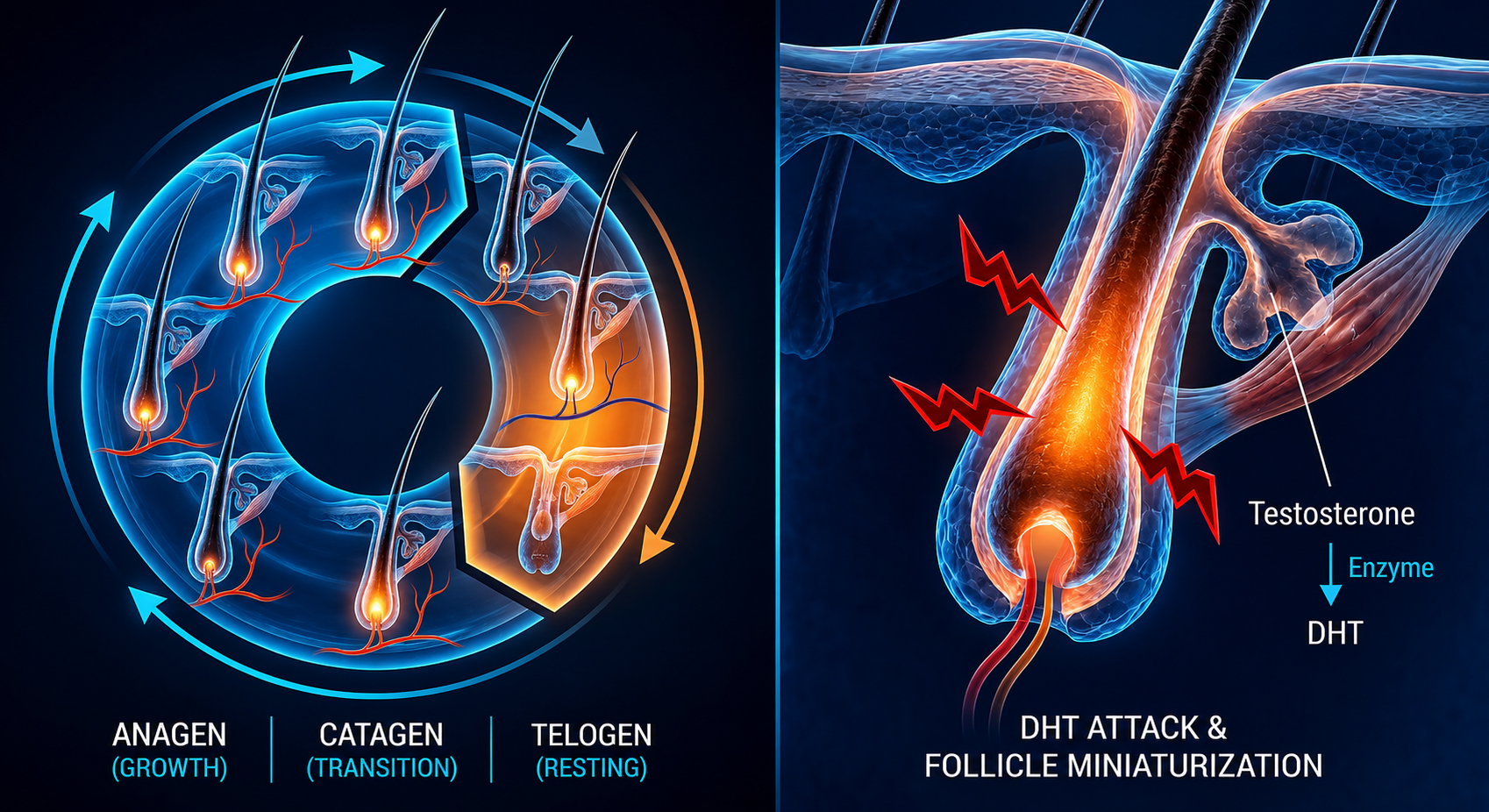
DHT, short for Dihydrotestosterone, is a hormone derived from testosterone.
The body converts testosterone into DHT through an enzyme called 5-alpha reductase.
DHT plays several important roles in the body, particularly during puberty, where it contributes to:
- Male sexual development
- Facial and body hair growth
- Deepening of the voice
- Development of male characteristics
Although DHT is essential for normal development, it can also contribute to hair loss in genetically susceptible individuals.
How Does DHT Cause Hair Loss?
DHT affects hair follicles differently depending on their location.
In individuals genetically predisposed to hair loss, DHT attaches to receptors within certain hair follicles—primarily those located on the top, front, and crown of the scalp.
Over time, DHT causes a process known as follicular miniaturization.
During this process:
- Hair follicles gradually shrink.
- Hair becomes thinner and weaker.
- The growth cycle shortens.
- Hair density decreases.
- Eventually, follicles stop producing visible hair altogether.
This gradual process is responsible for androgenetic alopecia, also known as male or female pattern hair loss.
Why Doesn't Everyone Lose Hair Because of DHT?
Not everyone is equally sensitive to DHT.
The primary reason is genetics.
People who inherit genes associated with androgenetic alopecia have hair follicles that are more sensitive to the effects of DHT.
As a result, even normal hormone levels may trigger progressive hair loss.
Individuals without this genetic predisposition may maintain full hair density throughout life despite having similar DHT levels.
Which Areas of the Scalp Are Affected by DHT?
DHT-sensitive hair follicles are usually found in:
- Frontal hairline
- Temples
- Mid-scalp
- Crown area
Interestingly, hair follicles located at the back and sides of the scalp are generally resistant to DHT.
This natural resistance is one of the reasons hair transplantation can provide long-lasting results.
DHT and Male Pattern Baldness
Male Pattern Baldness (androgenetic alopecia) is the most common form of hair loss worldwide.
Typical signs include:
- Receding hairline
- Temple recession
- Crown thinning
- Progressive scalp exposure
Without treatment, hair loss may continue gradually over many years.
The Norwood Scale is commonly used to classify the severity of male pattern baldness.
DHT and Female Pattern Hair Loss
Although DHT is often associated with men, it can also affect women.
Female Pattern Hair Loss usually presents as:
- Diffuse thinning
- Widening of the part line
- Reduced overall density
Unlike men, women rarely develop complete baldness.
Hormonal changes, genetics, and aging may all contribute to female hair loss.
Can DHT Hair Loss Be Reversed?
Early intervention offers the best chance of preserving existing hair.
While completely reversing advanced hair loss may not always be possible, treatment can often:
- Slow progression
- Stabilize hair loss
- Improve hair density
- Support existing follicles
The earlier treatment begins, the better the potential outcome.
Treatments That Target DHT
Several treatments aim to reduce the effects of DHT on hair follicles.
Finasteride
Finasteride is one of the most commonly prescribed medications for male pattern hair loss.
It works by blocking the enzyme responsible for converting testosterone into DHT.
Potential benefits include:
Reduced hair shedding
Slower progression of hair loss
Improved hair density
Finasteride should only be used under medical supervision.
Minoxidil
Minoxidil does not directly block DHT, but it may stimulate hair growth and prolong the growth phase of hair follicles.
Many patients combine Minoxidil with other treatments for improved results.
PRP Therapy
Platelet-Rich Plasma (PRP) therapy may support hair health and improve scalp conditions.
PRP is often used as part of a comprehensive treatment plan.
Hair Transplantation
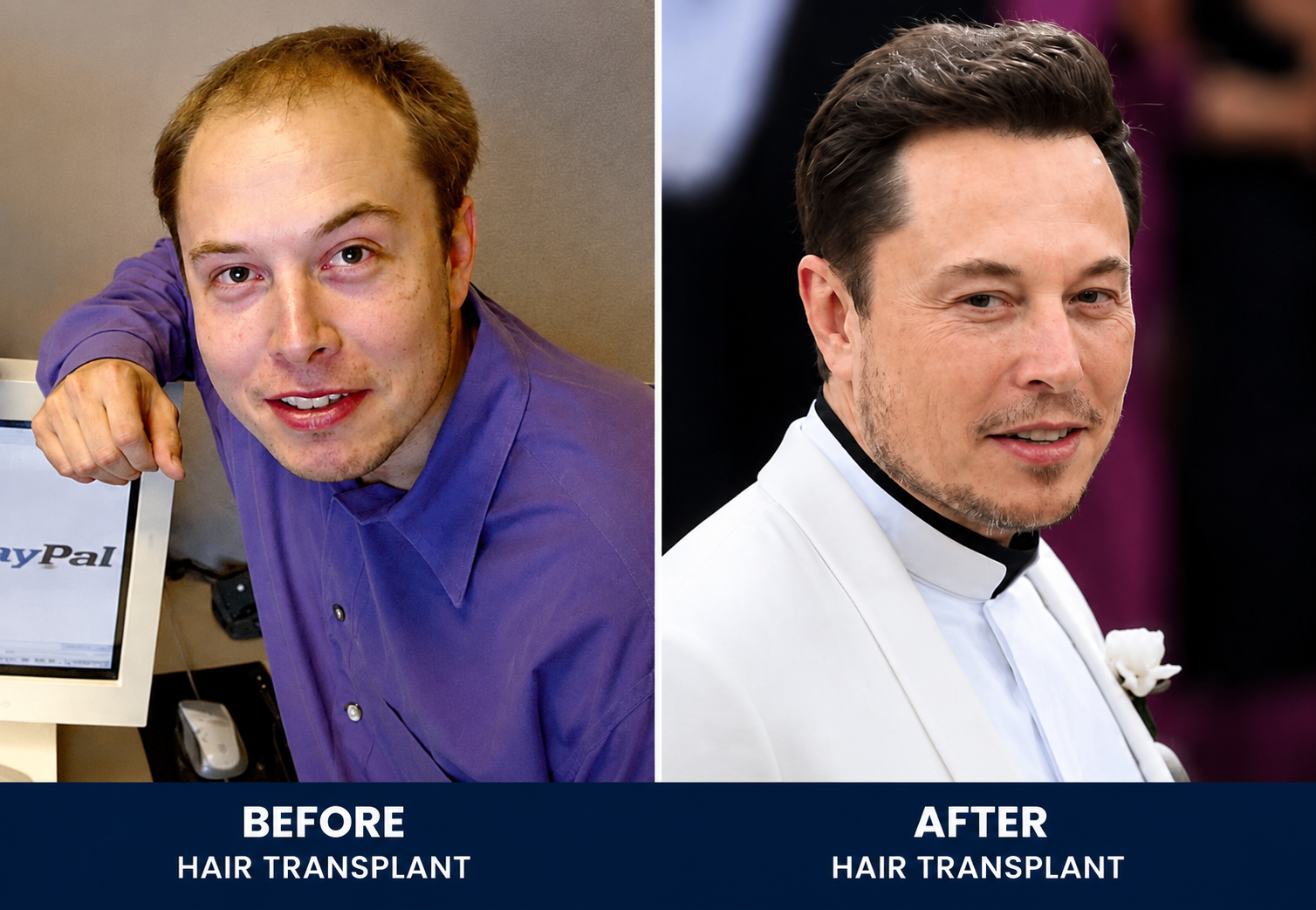
For patients experiencing permanent hair loss, hair transplantation remains one of the most effective long-term solutions.
Because donor hairs are usually harvested from DHT-resistant areas, transplanted follicles often continue growing permanently in their new location.
Can Lifestyle Changes Reduce DHT?
Lifestyle changes alone cannot eliminate DHT-related hair loss.
However, maintaining overall health may support hair quality and scalp health.
Helpful habits include:
- Eating a balanced diet
- Managing stress
- Avoiding smoking
- Treating nutritional deficiencies
- Following medical recommendations
Understanding DHT and Hair Loss: Final Thoughts
DHT plays a major role in androgenetic alopecia, the most common cause of hair loss worldwide.
However, genetics ultimately determine whether an individual will experience DHT-related hair loss.
Understanding how DHT affects hair follicles can help patients seek treatment earlier and make more informed decisions about long-term hair restoration.
If you are noticing progressive thinning, consulting an experienced hair restoration specialist is the best first step.
Frequently Asked Questions
What is DHT?
DHT (Dihydrotestosterone) is a hormone derived from testosterone that plays an important role in hair loss.
Does DHT cause all hair loss?
No. Many different conditions can cause hair loss. However, DHT is the primary cause of androgenetic alopecia.
Can women be affected by DHT?
Yes. DHT can contribute to female pattern hair loss.
Can hair grow back after DHT damage?
Early treatment may improve hair growth and slow progression, although advanced hair loss may require transplantation.
Is DHT bad for the body?
No. DHT plays important roles in normal development and bodily function. Problems occur only when genetically sensitive hair follicles react to DHT.