

Table of Contents
Imagine arriving in Turkey with chipped, stained, or uneven teeth and flying home just days later with a brighter, more confident smile. It sounds almost too good to be true—but for many patients, it can be a reality.
A smile makeover is one of the most popular reasons people travel for dental treatment. Thanks to advances in digital dentistry, careful treatment planning, and modern cosmetic techniques, many aesthetic dental procedures can be completed within a single visit.
But is a complete smile transformation really possible in just one week?
The answer depends on your oral health, the treatments you need, and your long-term goals. In this guide, we’ll explain what a smile makeover involves, which treatments fit into a one-week schedule, and when additional visits may be necessary.
What Is a Smile Makeover?
A smile makeover is a personalized treatment plan designed to improve the appearance and function of your smile. Rather than focusing on a single procedure, it combines one or more cosmetic and restorative treatments based on your individual needs.
Depending on your goals, a smile makeover may include:
- Porcelain veneers
- Zirconia crowns
- Composite bonding
- Teeth whitening
- Gum contouring
- Dental implants
- Orthodontic treatment with clear aligners
- Replacement of old crowns or fillings
Every smile is unique, so there is no one-size-fits-all solution.
Can It Really Be Done in One Week?
For many patients, yes.
If your teeth and gums are healthy and your treatment plan includes procedures such as veneers, crowns, bonding, or whitening, a smile makeover can often be completed within five to seven days.
A typical timeline may look like this:
Day 1 – Consultation and Digital Smile Assessment
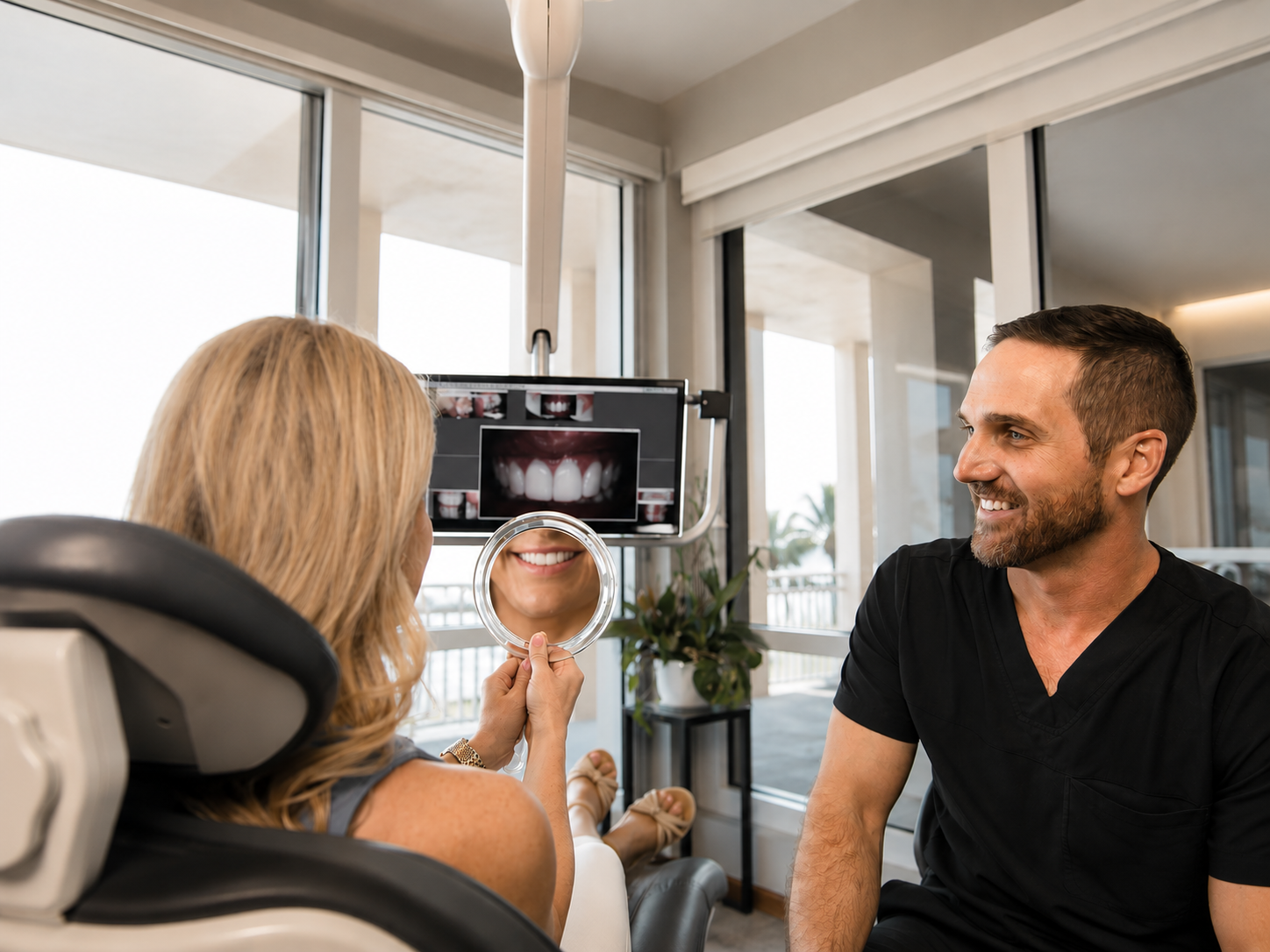
Your dentist will carry out a comprehensive examination using digital imaging, photographs, and scans. Together, you’ll discuss your expectations and create a personalized treatment plan.
Day 2 – Tooth Preparation
If veneers or crowns are recommended, the teeth are carefully prepared. Digital impressions are taken, and temporary restorations may be fitted while your final restorations are crafted.
Days 3–5 – Laboratory Work
Your custom restorations are created to match your facial features, bite, and natural tooth colour. During this time, you may have follow-up appointments to check the fit and make any necessary adjustments.
Days 6–7 – Final Smile Transformation
Your permanent veneers or crowns are fitted, polished, and adjusted to ensure a comfortable bite and a natural appearance.
Many patients return home shortly afterwards with their new smile.
When Is One Week Not Enough?
Although many cosmetic procedures fit into a single visit, some treatments require additional healing time.
For example:
Dental Implants
Implants need time to integrate with the jawbone before the final crown can be placed. This often means two visits separated by several months, although immediate-loading techniques may be appropriate in selected cases.
Orthodontic Treatment
Clear aligners gradually move the teeth over several months and are not completed during a short visit.
Complex Oral Health Issues
If gum disease, extensive decay, or bone grafting is required, these conditions usually need to be addressed before cosmetic treatment begins.
A thorough consultation is the best way to determine what timeline is realistic for you.
What Treatments Are Commonly Included?
Porcelain Veneers
Ideal for improving the colour, shape, size, and symmetry of teeth.
Zirconia Crowns
Recommended when teeth require greater structural support while still achieving an attractive cosmetic result.
Composite Bonding
A minimally invasive option for repairing small chips, closing gaps, or reshaping teeth.
Teeth Whitening
Often used as the finishing touch to brighten your smile.
Gum Contouring
Reshapes the gum line to create a more balanced appearance.
Each treatment is selected according to your oral health, facial proportions, and aesthetic goals.
How Is Your New Smile Designed?
Modern cosmetic dentistry is about much more than making teeth whiter.
Today’s smile makeovers take into account:
- Facial symmetry
- Lip position
- Smile line
- Tooth proportions
- Bite alignment
- Speech
- Overall facial harmony
Many clinics use digital smile design technology to help visualise your treatment before it begins, allowing adjustments to be discussed during the planning stage.
Does a Smile Makeover Look Natural?
One of the biggest misconceptions is that cosmetic dentistry always results in an overly white, artificial-looking smile.
In reality, a well-planned smile makeover is designed to complement your facial features and personal preferences.
The goal isn’t simply to create perfect teeth—it’s to create a smile that looks natural, balanced, and uniquely yours.
How Long Does a Smile Makeover Last?
The longevity of your results depends on the treatments performed and how well you care for your teeth.
To help maintain your new smile:
- Brush twice daily
- Floss every day
- Attend regular dental check-ups
- Avoid using teeth to open packages
- Wear a night guard if you grind your teeth
- Limit habits that may stain your teeth, such as smoking
With good oral hygiene and professional care, many cosmetic restorations can provide long-lasting results.
Why Do Patients Travel to Turkey for a Smile Makeover?
Turkey has become one of the world’s leading destinations for cosmetic dentistry because of its combination of experienced dental professionals, modern technology, and comprehensive patient support.
International patients also appreciate the opportunity to combine treatment with travel while benefiting from competitive pricing compared with many Western countries.
The key is choosing a reputable provider that offers personalised treatment planning and transparent communication.
Frequently Asked Questions
Will my new teeth look fake?
A well-designed smile makeover should enhance your appearance while maintaining a natural look. The shape, size, and colour of your restorations should be selected to suit your facial features and preferences.
Is a smile makeover painful?
Most cosmetic procedures involve minimal discomfort. Your dentist will discuss pain management and recovery based on your specific treatment plan.
How long should I stay in Turkey?
Many cosmetic smile makeovers can be completed within five to seven days. More complex procedures may require additional visits.
Can I eat normally afterwards?
Your dentist will provide personalized aftercare instructions. Depending on your treatment, you may need to avoid very hard or sticky foods for a short period.
Why Choose Novera Healthcare?
At Novera Healthcare, every smile makeover begins with understanding the individual behind the smile. We believe cosmetic dentistry should enhance both confidence and oral health, which is why every treatment plan is tailored to your unique needs.
Working with experienced dental professionals and advanced digital technology, we focus on creating natural-looking, functional results—not one-size-fits-all smiles. From your first consultation to your aftercare, our international patient coordinators are here to support you throughout your journey.
Final Thoughts
A new smile in one week is possible for many patients—but it starts with realistic expectations and a personalised treatment plan.
Whether you’re considering veneers, crowns, whitening, or a complete smile makeover, the most successful results come from careful planning, modern techniques, and a trusted dental team.
If you’re thinking about transforming your smile in Turkey, a professional consultation is the first step toward discovering the treatment options that are right for you.
Final Thoughts
A new smile in one week is possible for many patients—but it starts with realistic expectations and a personalised treatment plan.
Whether you’re considering veneers, crowns, whitening, or a complete smile makeover, the most successful results come from careful planning, modern techniques, and a trusted dental team.
If you’re thinking about transforming your smile in Turkey, a professional consultation is the first step toward discovering the treatment options that are right for you.
Sources & References
- American Dental Association (ADA)
- International Team for Implantology (ITI)
- European Association for Osseointegration (EAO)
- National Health Service (NHS)
- World Health Organization (WHO)
Medical Disclaimer
The information provided in this article is intended for educational purposes only and should not be considered medical advice. Every patient is unique, and treatment recommendations vary depending on individual circumstances. Always consult a qualified healthcare professional for a personalised assessment and treatment plan.