Septoplasty in Turkey
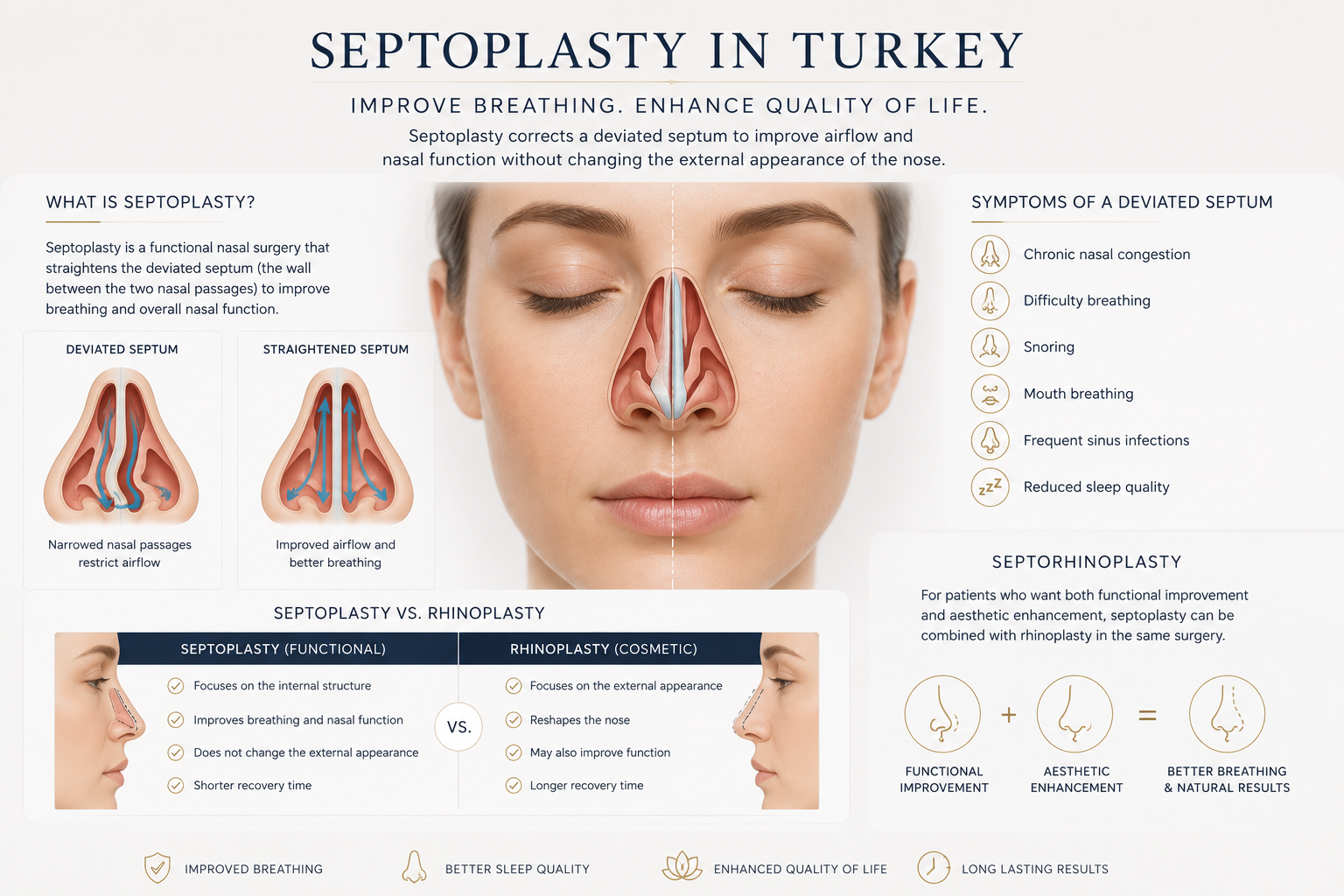
Septoplasty in Turkey is a functional nasal surgery performed to correct a deviated septum and improve breathing through the nose. Unlike cosmetic rhinoplasty, septoplasty focuses on the internal structure of the nose rather than changing its external appearance.
A deviated septum can make one or both nasal passages narrower, leading to chronic congestion, difficulty breathing, snoring, mouth breathing, frequent sinus problems, and reduced sleep quality. Septoplasty helps straighten the septum, improve airflow, and support better nasal function.
For patients who also want to improve the shape of their nose, septoplasty can be combined with rhinoplasty in the same operation. When functional septum correction and cosmetic nose reshaping are performed together, the procedure is called septorhinoplasty.
- Septoplasty in Turkey
- Quick Summary
- Popular Septoplasty Combinations at Novera
- Who Can Benefit from Septoplasty?
- What Is Septoplasty?
- What Is a Deviated Septum?
- Septoplasty vs. Rhinoplasty Comparison
- Can Septoplasty Be Combined with Rhinoplasty?
- Septoplasty vs. Septorhinoplasty Matrix
- When Is Septorhinoplasty Recommended?
- How Is Septoplasty Performed?
- Septoplasty Recovery Timeline
- Septoplasty Surgical Results
- Septoplasty Cost in Turkey
- Why Choose Turkey for Septoplasty?
- Frequently Asked Questions (FAQs)
Quick Summary
Septoplasty corrects a deviated septum to restore clear nasal breathing.
Treatment Attribute | Quick Details |
Primary Purpose | Internal structural correction to eliminate chronic nasal blockage |
Procedure Time | 1 to 2 Hours (Standalone Septoplasty) |
External Changes | Standalone septoplasty does not alter the outside shape of your nose |
Combined Track | Can be upgraded to Septorhinoplasty for simultaneous cosmetic refinement |
Initial Recovery | 1 to 2 weeks (internal silicone splints removed on Day 6-7) |
Popular Septoplasty Combinations at Novera
Correcting internal airflow issues is the perfect opportunity to address surrounding structural or cosmetic imperfections during a single anesthesia session:
1. The Total Structural Solution: Septoplasty + Cosmetic Rhinoplasty (Septorhinoplasty)
This is the most popular combination in global plastic surgery. If you have trouble breathing due to a crooked internal septum and are also unhappy with a dorsal hump, wide tip, or asymmetry, performing both together is the golden standard. Your surgeon uses the cartilage removed during the septoplasty to structurally shape and support your new external bridge, giving you perfect breathing and beautiful facial harmony in one recovery period.
2. The Airway & Profile Rebalance: Septorhinoplasty + Chin Liposuction
Chronic mouth breathing caused by a deviated septum often goes hand-in-hand with a weaker lower-jaw profile or poor chin projection. Combining an airway-clearing Septorhinoplasty with submental Chin Liposuction completely alters your appearance. It creates a striking, athletic, and structurally balanced line running from the bridge of your nose down to a sharp, contoured jawline.
Who Can Benefit from Septoplasty?
You may benefit from septoplasty in Turkey if you experience:
- Difficulty breathing through the nose
- Chronic nasal congestion
- One-sided nasal blockage
- Snoring related to nasal obstruction
- Mouth breathing
- Frequent sinus infections
- Nosebleeds caused by airflow imbalance
- Sleep disturbance due to poor nasal breathing
- Nasal obstruction after trauma or injury
A consultation helps determine whether your symptoms are caused by a deviated septum, nasal turbinates, allergies, or another underlying condition.
What Is Septoplasty?
Septoplasty is a surgical procedure that corrects a deviated nasal septum. The septum is the wall of cartilage and bone that separates the left and right nasal passages.
When the septum is bent, crooked, or displaced, it can reduce airflow and make breathing through the nose difficult. During septoplasty, the surgeon carefully repositions or reshapes the deviated parts of the septum to create a clearer airway.
The purpose of septoplasty is functional improvement. It is not designed to make the nose smaller, refine the nasal tip, or change the profile of the nose.
What Is a Deviated Septum?
A deviated septum occurs when the nasal septum is shifted away from the centerline of the nose. Some patients are born with a deviated septum, while others develop it after trauma, injury, or previous nasal surgery.
Common symptoms include:
- Nasal blockage
- Difficulty breathing through one or both nostrils
- Chronic congestion
- Snoring
- Mouth breathing
- Dry mouth upon waking
- Frequent sinus pressure
- Nosebleeds
- Reduced sleep quality
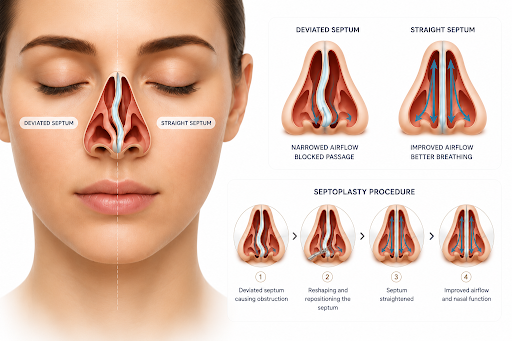
Not every deviated septum requires surgery. Septoplasty is usually considered when symptoms affect breathing, sleep, or quality of life.
Septoplasty vs Rhinoplasty
Feature | Septoplasty | Rhinoplasty |
Main Purpose | Improve breathing | Improve nose appearance |
Corrects Deviated Septum | Yes | Not alone |
Changes Nose Shape | Usually no | Yes |
Cosmetic Goal | No | Yes |
Breathing Improvement | Yes | Sometimes, if functional issues are addressed |
Focus | Internal nasal structure | External nasal shape and facial harmony |
Can Septoplasty Be Combined with Rhinoplasty?
Yes. Many patients have both functional and cosmetic concerns. For example, a patient may have difficulty breathing because of a deviated septum and also wish to refine the nasal bridge, tip, or overall nose shape.
In these cases, septoplasty and rhinoplasty can be performed during the same surgery. This combined procedure is called septorhinoplasty.
Combining both procedures may offer several advantages:
- One surgery instead of two
- One recovery period
- Improved nasal breathing
- Enhanced facial harmony
- Better structural support
- Long-term functional and aesthetic results
Septoplasty vs Septorhinoplasty
Feature | Septoplasty | Septorhinoplasty |
Corrects Deviated Septum | Yes | Yes |
Improves Breathing | Yes | Yes |
Changes External Nose Shape | No | Yes |
Includes Cosmetic Rhinoplasty | No | Yes |
Suitable for Breathing Problems | Yes | Yes |
Suitable for Aesthetic Concerns | No | Yes |
When Is Septorhinoplasty Recommended?
Septorhinoplasty may be recommended when a patient needs both functional correction and cosmetic reshaping.
It may be suitable if you:
- Have a deviated septum and breathing difficulties
- Want to improve the appearance of your nose
- Have nasal trauma affecting both function and shape
- Have a crooked nose with internal obstruction
- Want to avoid two separate surgeries
- Need structural support for both breathing and aesthetics
For many patients, septorhinoplasty provides a more complete solution than septoplasty alone.
How Is Septoplasty Performed?
Septoplasty is usually performed under general anesthesia. The surgeon works through incisions inside the nose, so there is typically no visible external scar.
The procedure generally involves:
- Accessing the septum through internal nasal incisions
- Identifying the deviated cartilage or bone
- Repositioning, reshaping, or removing obstructive parts
- Preserving enough septal support for nasal stability
- Closing the internal incisions
The procedure is carefully planned to improve airflow while maintaining the structural integrity of the nose.
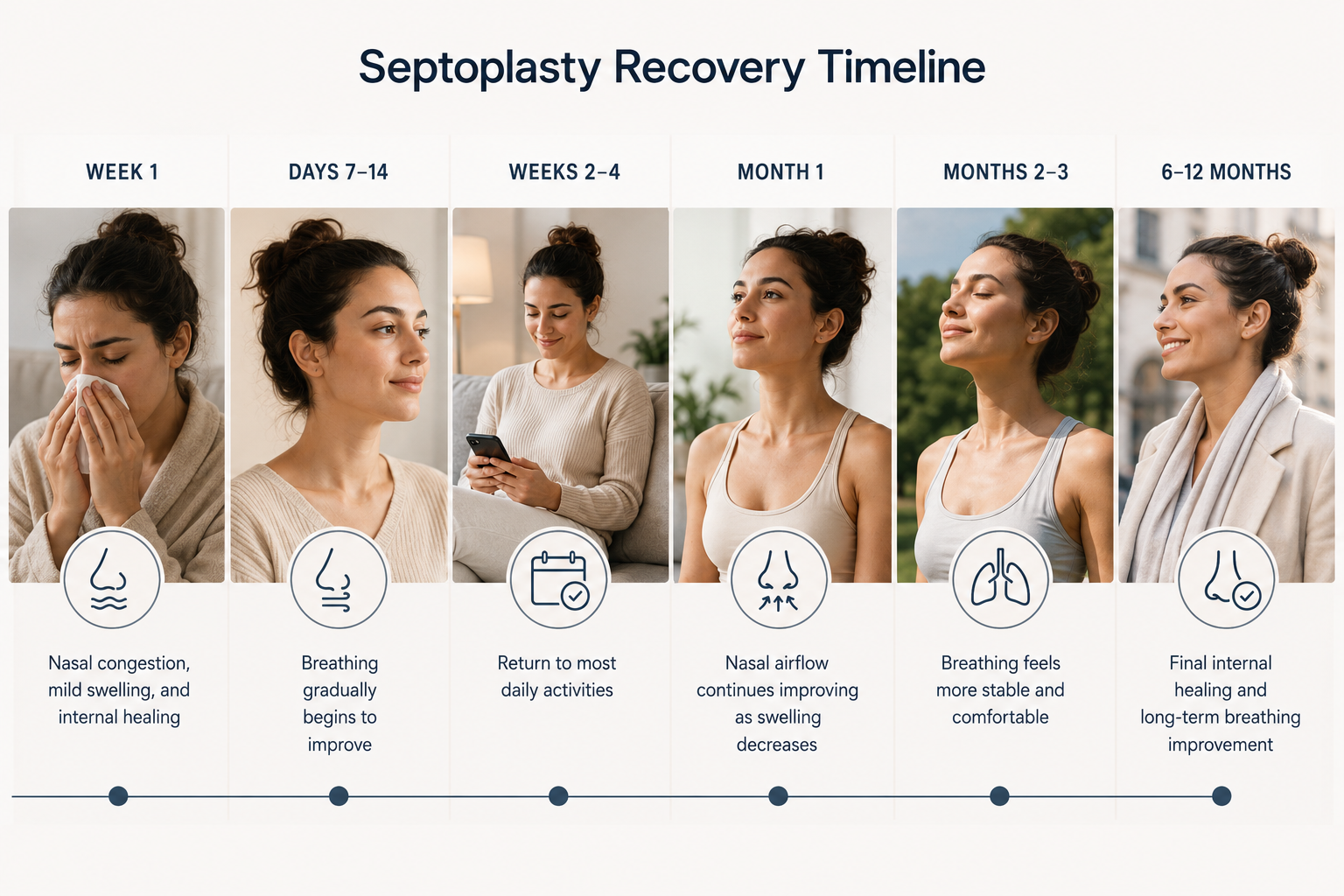
Septoplasty Recovery Timeline
Timeline | What to Expect |
Week 1 | Nasal congestion, mild swelling, and internal healing |
Days 7–14 | Breathing gradually begins to improve |
Weeks 2–4 | Return to most daily activities |
Month 1 | Nasal airflow continues improving as swelling decreases |
Months 2–3 | Breathing feels more stable and comfortable |
6–12 Months | Final internal healing and long-term breathing improvement |
Septoplasty Results
The main result of septoplasty is improved nasal function.
Patients may experience:
- Easier breathing through the nose
- Less chronic congestion
- Reduced mouth breathing
- Improved sleep quality
- Reduced snoring when nasal obstruction is the cause
- Better airflow during exercise
- Improved comfort in daily life
If cosmetic changes are also desired, septorhinoplasty may be a more appropriate option.
Septoplasty Cost in Turkey
The cost of septoplasty in Turkey depends on the complexity of the deviation, hospital facilities, surgeon experience, anesthesia, and whether it is performed alone or combined with rhinoplasty.
Procedure | Estimated Price |
Septoplasty | Starting from €3,500 |
Septorhinoplasty | Starting from €5,500 |
Final pricing is determined after consultation and medical evaluation.
Why Choose Turkey for Septoplasty?
Turkey is a popular destination for nasal surgery because of experienced surgeons, modern hospitals, comprehensive patient coordination, and competitive treatment costs.
For international patients, treatment planning may include:
- Online consultation
- Medical evaluation
- Surgery coordination
- Hospital arrangements
- Hotel and transfer support
- Interpreter support
- Post-operative follow-up
Frequently Asked Questions
Septoplasty is a functional nasal surgery that corrects a deviated septum to improve airflow and breathing through the nose.
Septoplasty alone usually does not change the external appearance of the nose. If you want both breathing improvement and cosmetic reshaping, septorhinoplasty may be recommended.
Septoplasty improves breathing by correcting the internal septum. Rhinoplasty changes the external shape of the nose for cosmetic or structural reasons.
Septorhinoplasty is a combined procedure that includes septoplasty for breathing improvement and rhinoplasty for cosmetic nose reshaping.
Yes. Septoplasty is specifically designed to improve nasal airflow by correcting septal deviation.
It may help if snoring is caused or worsened by nasal obstruction. However, snoring can also be related to other airway or sleep issues.
Most patients experience pressure, congestion, and mild discomfort rather than severe pain. Symptoms are usually manageable with medication and aftercare instructions.
Septoplasty usually takes around 1–2 hours, depending on the complexity of the deviation and whether additional procedures are performed.
Most patients return to normal daily activities within 1–2 weeks. Internal healing and breathing improvement continue over several weeks.
Many patients return to desk work within 7–10 days, depending on their recovery and job type.
Yes. When septoplasty is combined with rhinoplasty, the procedure is called septorhinoplasty.
Septoplasty results are generally long-lasting. However, future trauma, healing changes, or other nasal conditions may affect breathing over time.
A properly corrected septum usually remains stable, but trauma or healing-related changes may affect the nasal structure in rare cases.
If your only concern is breathing, septoplasty may be enough. If you also want to improve the appearance of your nose, septorhinoplasty may be the better option.
