Revision Rhinoplasty
Revision rhinoplasty in Turkey is a highly specialized procedure performed to improve the appearance or function of the nose after a previous rhinoplasty. Whether the concern is cosmetic, functional, or both, revision surgery needs advanced skill, careful planning, and a personal approach.
Unlike primary rhinoplasty, revision procedures are often more complex due to scar tissue, altered anatomy, or limited cartilage availability. The goal is to restore balance, improve breathing when needed, and create natural-looking results. It also preserves long-term nasal support.
Turkey has become a leading destination for revision rhinoplasty, offering experienced revision surgeons, advanced surgical techniques, and comprehensive care for international patients.
- Revision Rhinoplasty in Turkey
- Quick Summary
- Popular Revision Rhinoplasty Combinations at Novera
- Who Can Benefit from Revision Rhinoplasty?
- What Is Revision Rhinoplasty?
- Why Revision Rhinoplasty Is More Complex
- Primary vs. Revision Rhinoplasty Comparison
- Common Reasons for Revision Rhinoplasty
- Why Revision Rhinoplasty Sometimes Becomes Necessary
- How Novera Approaches Revision Cases
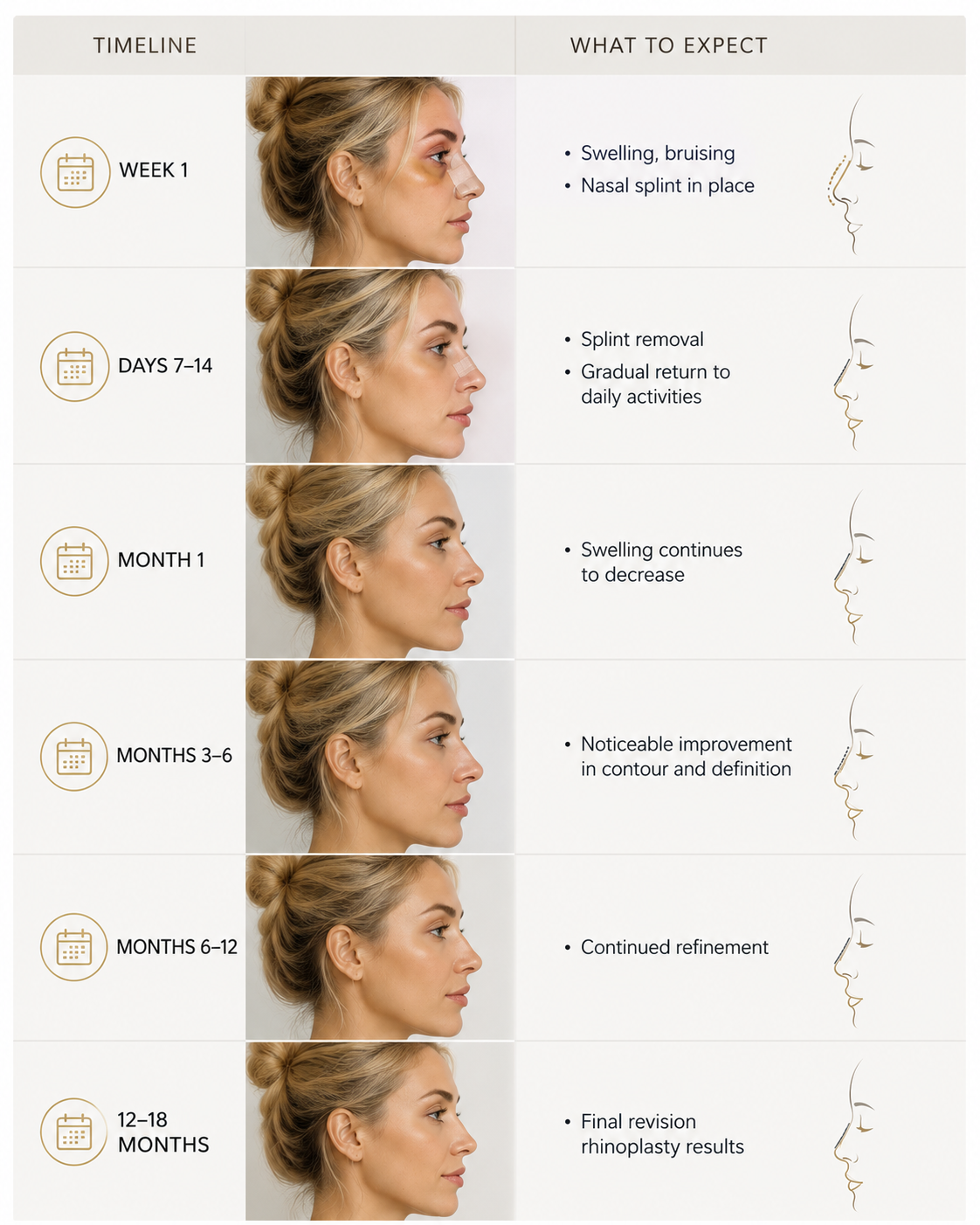
- Revision Rhinoplasty Recovery Timeline
- Revision Rhinoplasty Before & After Results
- Revision Rhinoplasty Cost in Turkey
- Frequently Asked Questions (FAQs)
Quick Summary
Revision rhinoplasty corrects or improves the outcome of a previous nose surgery.
Treatment Attribute | Quick Details |
Procedure Time | 3 to 6 Hours (depending on structural damage) |
Surgical Necessity | Frequently requires advanced autologous grafting (rib or ear cartilage) |
Stay in Turkey | 7 Nights / 8 Days (slightly longer stay recommended for revision monitoring) |
Initial Recovery | 1 to 2 weeks (splint and structural guards removed on Day 6-7) |
Final Swelling Clear | Can take 12 to 18 months due to pre-existing scar tissue layers |
Popular Revision Rhinoplasty Combinations at Novera
Correcting a previous nose surgery fundamentally changes how your mid-face proportions interact with your surrounding features. Combining your revision with these precise surgical procedures during the same surgical session allows for total profile balancing without multiple recovery periods:
1. The Definitive Profile Alignment: Revision Rhinoplasty + Chin Liposuction
Many patients seeking revision rhinoplasty feel their overall profile is still “off” even after their first nasal surgery. Often, the real culprit isn’t just the nose, but an untreated double chin or weak jawline projection breaking the profile line. Vacuuming away stubborn submental fat via Chin Liposuction while our master surgeons rebuild your nasal bridge alignment creates a clean, athletic, and fully synchronized chin-to-neck frame.
2. The Restorative Eye Lift: Revision Rhinoplasty + Canthopexy (Fox Eye)
A failed or over-reduced primary rhinoplasty can cause the center of the face to look flat or artificially pulled down, often leaving the eyes looking tired or hollow. Pairing your corrective nose surgery with a structural Canthopexy subtly tilts the outer corners of your eyes upward. This combination brightens the upper face, framing your newly reconstructed nose with refreshed, attractive, and balanced almond-eye geometry.
Who Can Benefit from Revision Rhinoplasty?
- Unsatisfactory cosmetic outcome
- Functional breathing problems
- Nasal asymmetry
- Tip deformities
- Bridge collapse
- Previous trauma after rhinoplasty
- Patients seeking both functional and aesthetic improvement
What Is Revision Rhinoplasty?
Revision rhinoplasty is a secondary or tertiary nose surgery performed to improve the appearance, function, or structural integrity of a nose that has previously undergone rhinoplasty.
Unlike primary rhinoplasty, revision procedures require careful assessment of scar tissue, altered anatomy, and the remaining nasal support structures. Every revision case is unique and requires a personalized surgical plan.
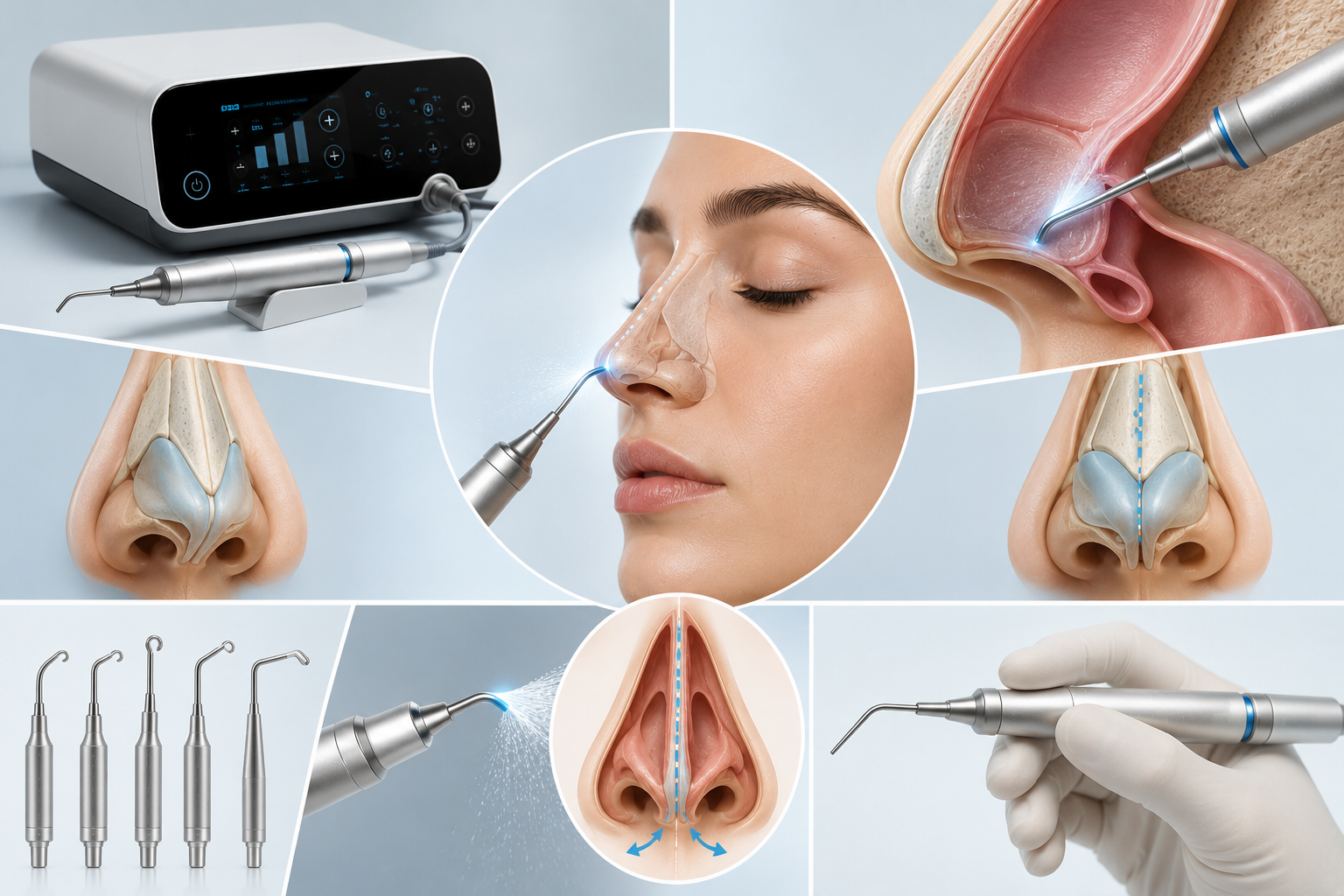
Why Revision Rhinoplasty Is More Complex
Scar Tissue
Previous surgery often creates scar tissue that makes surgical dissection more challenging.
Altered Anatomy
Normal anatomical landmarks may have changed following the first operation.
Limited Cartilage
Additional cartilage grafts are frequently needed because septal cartilage may no longer be available.
Functional Concerns
Many patients seek revision surgery to improve breathing as well as appearance.
Primary vs Revision Rhinoplasty
Although both procedures aim to improve the appearance and function of the nose, revision rhinoplasty is generally more complex because it involves operating on a nose that has already undergone surgery.
Feature | Primary Rhinoplasty | Revision Rhinoplasty |
Previous Surgery | No | Yes |
Surgical Complexity | Moderate | High |
Scar Tissue | Minimal | Common |
Cartilage Grafting | Sometimes | Frequently Required |
Procedure Time | 2–4 Hours | 3–6 Hours |
Recovery | Standard | May Take Longer |
Main Goal | First-time refinement | Correct or improve previous results |
Common Reasons for Revision Rhinoplasty
Patients may seek revision rhinoplasty in Turkey for a variety of reasons, including:
- Persistent dorsal hump
- Crooked nose after surgery
- Pinched nasal tip
- Drooping tip
- Saddle nose deformity
- Nostril asymmetry
- Visible irregularities
- Collapse of nasal support
- Breathing difficulties
- Unsatisfactory cosmetic outcome
Why Revision Rhinoplasty Sometimes Becomes Necessary
Needing revision surgery does not always mean the first rhinoplasty was unsuccessful. Healing patterns, tissue characteristics, and anatomical changes all influence the final result.
Some common reasons include:
- Persistent asymmetry
- Scar tissue formation
- Over- or under-correction
- Loss of structural support
- Functional breathing problems
- Healing differences between patients
- Unrealistic expectations following the initial procedure
How Novera Approaches Revision Cases
Revision rhinoplasty requires patience, experience, and careful planning.
Every revision patient receives a personalized treatment plan that includes:
- Comprehensive photo analysis
- Detailed functional assessment
- Review of previous surgical history
- Individualized surgical planning
- Conservative structural reconstruction
- Long-term stability rather than excessive reduction
- Dedicated post-operative follow-up
Our goal is not just to change the nose’s appearance. We also restore confidence, improve function, and deliver natural-looking, long-lasting results.
Revision Rhinoplasty Recovery Timeline
Revision Rhinoplasty Before & After Results
Successful revision rhinoplasty before and after results should demonstrate:
- Improved facial harmony
- Better nasal symmetry
- Restored structural support
- Enhanced breathing (when applicable)
- Natural-looking refinement
- Long-term stability
The objective is to improve the previous surgical outcome while preserving both function and natural facial balance.
Revision Rhinoplasty Cost in Turkey
The cost of revision rhinoplasty in Turkey depends on:
- Complexity of the revision
- Previous surgical history
- Need for cartilage grafts
- Functional reconstruction
- Surgical technique
- Hospital facilities
Procedure | Estimated Price |
Revision Rhinoplasty | Starting from €6,000 |
Final pricing is determined following a detailed consultation and personalized treatment plan.
Frequently Asked Questions
Most surgeons recommend waiting at least 12 months after your first surgery before considering revision.
Common reasons include cosmetic dissatisfaction, breathing difficulties, asymmetry, scar tissue, structural collapse, or changes that occurred during healing.
Yes. Revision surgery is generally more complex because of scar tissue, altered anatomy, and the possible need for cartilage grafting.
Not every patient requires grafts, but cartilage grafting is commonly used to rebuild structural support and improve long-term stability.
Depending on your anatomy, cartilage may be taken from the septum, ear, or rib.
Yes. Many revision procedures improve both the appearance and function of the nose.
The goal is to create natural-looking, balanced results that complement your facial features rather than dramatically changing your appearance.
Initial recovery usually takes 1–2 weeks, while final refinement continues for 12–18 months.
Most swelling resolves gradually, with final results typically becoming visible between 12 and 18 months.
Yes. Piezo Rhinoplasty may be used in selected cases to reshape the nasal bones with greater precision while minimizing trauma to surrounding tissues.
Yes, although each additional surgery becomes increasingly complex. Whenever possible, revision surgery should aim to provide a stable, long-term solution.
If you are unhappy with the appearance of your nose, have persistent breathing problems, or feel your previous rhinoplasty did not achieve the desired result, a consultation with an experienced revision surgeon can help determine whether revision surgery is appropriate.
