Advanced Hair Restoration Treatments
Supporting Hair Transplant Results with Regenerative Therapies
Hair transplantation restores hair by relocating healthy follicles to areas affected by hair loss. In addition to surgical treatment, regenerative therapies can help support the healing process, improve scalp health, and create a healthier environment for newly transplanted grafts.
At Novera, we offer Exosome Therapy and Stem Cell Hair Treatment as complementary regenerative options for selected patients. While these therapies do not replace hair transplantation, they may help optimize recovery and support healthier hair growth following FUE or DHI procedures.
- Advanced Hair Restoration Treatments
- Exosome Therapy
- Stem Cell Hair Treatment
- Can Regenerative Therapies Replace Hair Transplantation?
- Frequently Asked Questions
Exosome Therapy
Supporting Healing and Scalp Regeneration
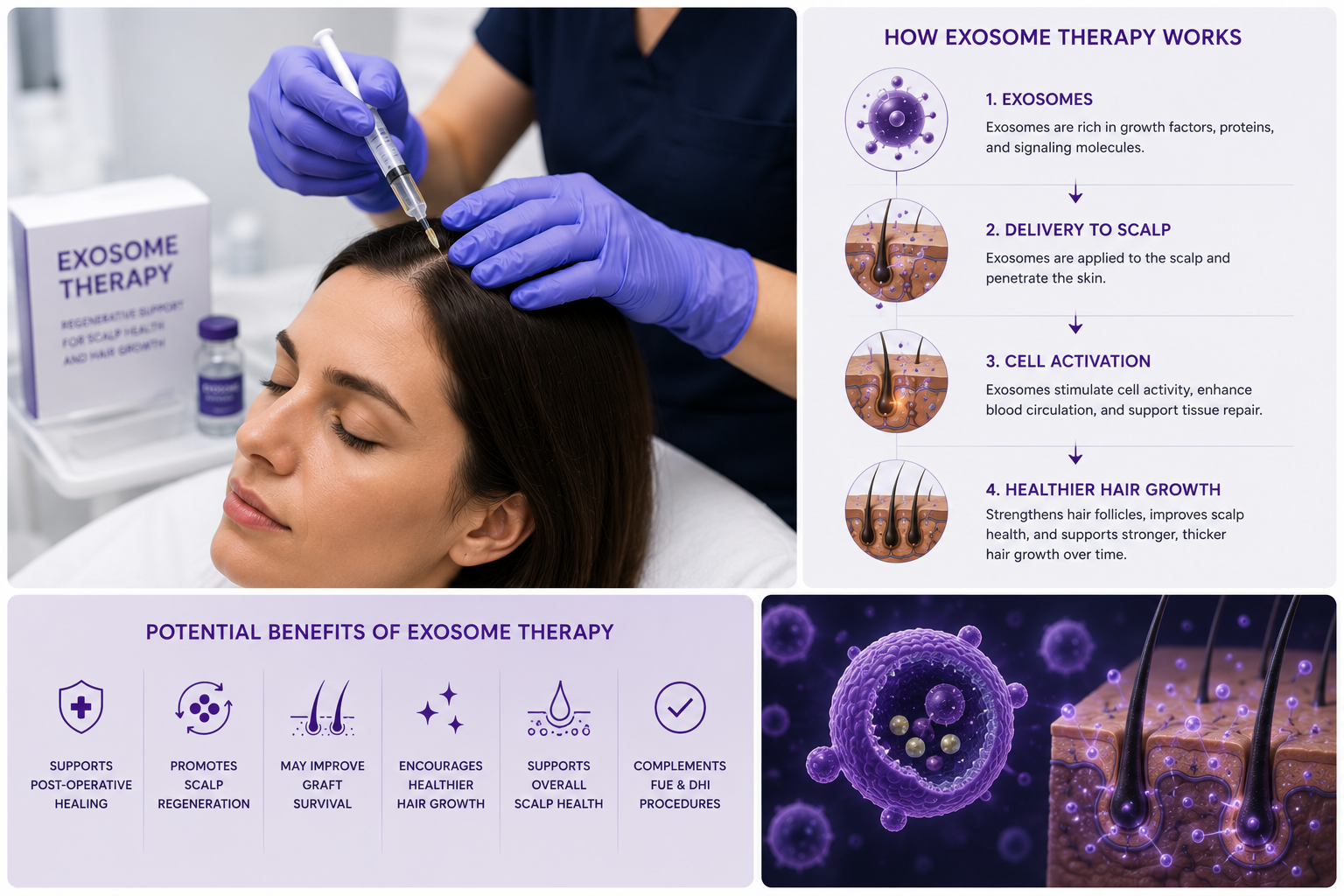
Exosome Therapy is one of the newest developments in regenerative medicine and is increasingly used to complement modern hair restoration treatments. Exosomes are microscopic extracellular vesicles that contain naturally occurring proteins, growth factors, and signaling molecules involved in cellular communication and tissue repair.
When applied to the scalp following a hair transplant, exosomes may help create a healthier environment for transplanted follicles, support tissue healing, and promote stronger, healthier hair growth.
Although research continues to evolve, Exosome Therapy is becoming an increasingly popular addition to comprehensive hair restoration plans because of its regenerative potential.
Potential Benefits of Exosome Therapy
✔ Supports post-operative healing
✔ Promotes scalp regeneration
✔ May improve graft survival
✔ Encourages healthier hair growth
✔ Supports overall scalp health
✔ Complements FUE and DHI procedures
Can Exosome Therapy Replace Hair Transplantation?
No. Exosome Therapy cannot create new hair follicles or replace a hair transplant. Instead, it is used as a complementary treatment to support healing, improve scalp health, and help create optimal conditions for transplanted grafts following FUE or DHI hair transplantation.
Stem Cell Hair Treatment
Regenerative Support for Healthier Hair Growth
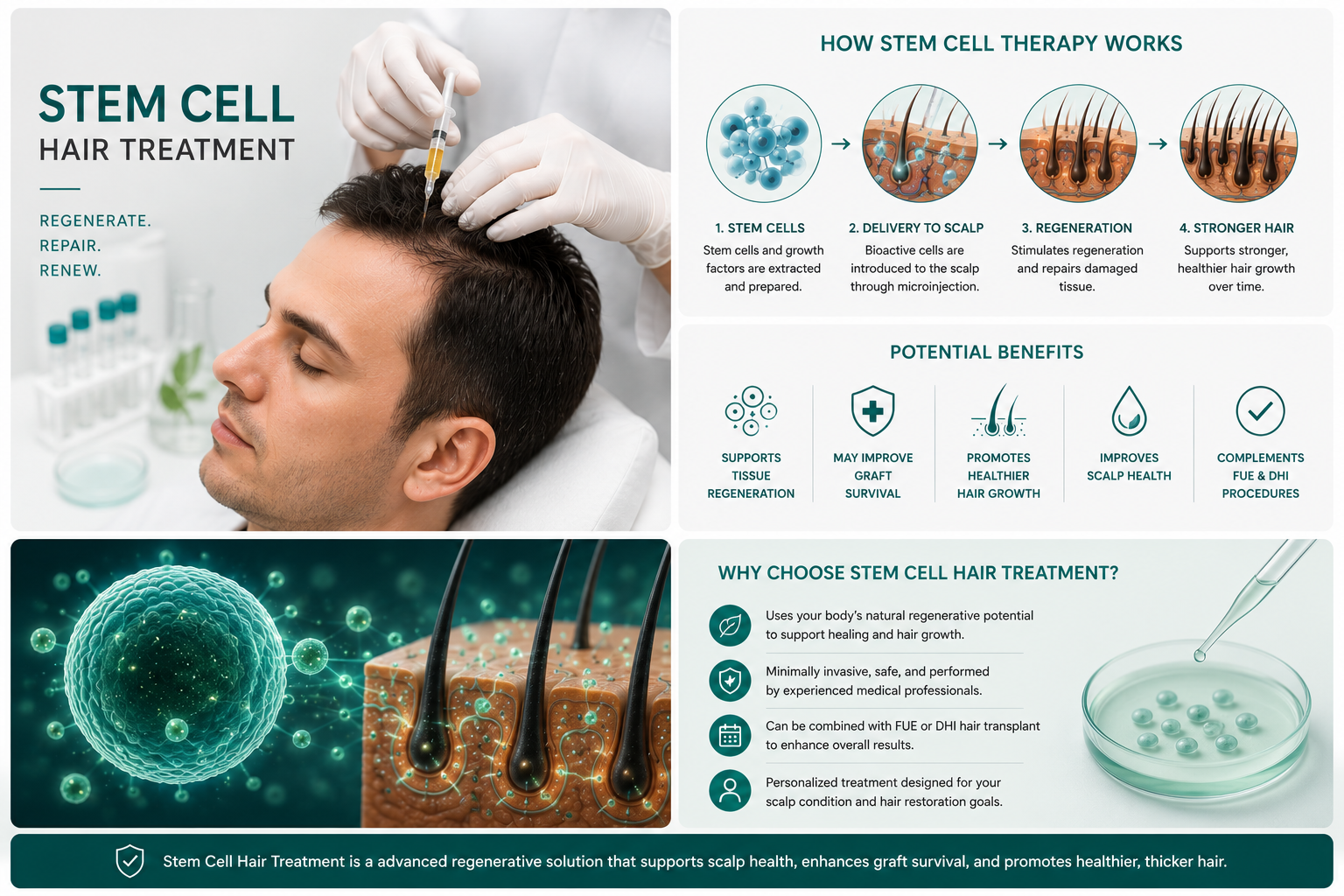
Stem Cell Hair Treatment is a regenerative therapy designed to support tissue repair, improve scalp health, and enhance the overall hair restoration process. The treatment utilizes regenerative cells and growth factors obtained from the patient’s own tissue to encourage healing and support the health of existing and newly transplanted hair follicles.
When combined with hair transplantation, Stem Cell Therapy may help improve the scalp environment, support graft survival, and promote healthier, stronger hair growth throughout the recovery period.
As regenerative medicine continues to advance, Stem Cell Therapy has become an increasingly valuable addition to comprehensive hair restoration plans.
Potential Benefits of Stem Cell Hair Treatment
✔ Supports tissue regeneration
✔ May improve graft survival
✔ Promotes healthier hair quality
✔ Supports scalp repair
✔ Encourages stronger hair growth
✔ Complements FUE and DHI procedures
Who Is Stem Cell Hair Treatment Suitable For?
Stem Cell Therapy may be recommended for patients who:
Are undergoing hair transplantation
Want to support post-operative healing
Wish to improve scalp quality
Are seeking a regenerative addition to their treatment plan
Want to optimize long-term hair restoration outcomes
Can Stem Cell Therapy Replace Hair Transplantation?
No. Stem Cell Therapy is not a substitute for hair transplantation. While it may support tissue repair, improve scalp health, and contribute to a healthier healing environment, it cannot restore permanently lost hair follicles. For patients with moderate to advanced hair loss, FUE or DHI hair transplantation remains the primary treatment, while Stem Cell Therapy serves as a complementary regenerative option.
Can Stem Cell Therapy Replace Hair Transplantation?
No. Stem Cell Therapy is not a substitute for hair transplantation. While it may support tissue repair, improve scalp health, and contribute to a healthier healing environment, it cannot restore permanently lost hair follicles. For patients with moderate to advanced hair loss, FUE or DHI hair transplantation remains the primary treatment, while Stem Cell Therapy serves as a complementary regenerative option.
Frequently Asked Questions
Exosome Therapy is a regenerative treatment that uses microscopic extracellular vesicles containing naturally occurring proteins, growth factors, and signaling molecules. It is designed to support tissue repair, improve scalp health, and promote a healthier environment for hair growth, particularly after hair transplantation.
Stem Cell Hair Treatment is a regenerative therapy that utilizes biologically active cells and growth factors derived from the patient’s own tissue. It is used to support tissue regeneration, improve scalp health, and enhance the overall hair restoration process.
No. Neither Exosome Therapy nor Stem Cell Hair Treatment can create new hair follicles or replace hair transplantation. These treatments are designed to complement FUE or DHI procedures by supporting healing, improving scalp health, and optimizing graft survival.
Exosome Therapy may help support post-operative healing, improve scalp health, encourage healthier hair growth, and create a more favorable environment for transplanted follicles.
Stem Cell Hair Treatment may support tissue repair, improve scalp regeneration, enhance graft survival, and promote healthier, stronger hair growth as part of a comprehensive hair restoration plan.
Regenerative therapies may be suitable for patients undergoing FUE or DHI hair transplantation, individuals experiencing early hair thinning, or those looking to support scalp health and optimize their hair restoration results. Your specialist will determine whether these treatments are appropriate during your consultation.
Yes. Both treatments are commonly used alongside FUE and DHI hair transplantation to support the healing process, improve the scalp environment, and help optimize overall treatment outcomes.
The timing depends on your personalized treatment plan. In many cases, regenerative therapies are performed during or shortly after hair transplantation, while some patients may benefit from additional sessions during the recovery period.
When performed by experienced medical professionals using appropriate clinical protocols, both treatments are generally considered minimally invasive and well tolerated. Your specialist will assess your medical history and determine whether you are a suitable candidate.
The most appropriate treatment depends on your scalp condition, pattern of hair loss, treatment goals, and whether you are undergoing FUE or DHI hair transplantation. Following a detailed consultation, your specialist will recommend the regenerative therapy best suited to your individual needs.
