Hair Transplant Turkey
Procedure Duration | Stay in Turkey | Recovery Time | Final Results | |
6–8 Hours | 3–4 Days | 7–14 Days | 6–12 Months |
If you’re looking for a permanent solution to your hair loss, a hair transplant surgery is one of the most reliable ways to restore your hair. Both men and women can benefit tremendously from this treatment. Hair transplantation is usually completed in a single session under local anesthesia with little to no discomfort during the procedure. International patients are typically advised to stay in Turkey for 3 to 4 days. This duration allows the patients ample time to get their pre-op consultation, treatment, and follow-up before they are ready to return home.
Why do people go to Turkey for hair transplants?
In recent years, Turkey has become the leading destination for hair restoration, attracting thousands of patients seeking top-tier doctors, experienced medical teams, advanced techniques, and all-inclusive treatment packages.
A very common question is why is Turkey known for hair transplants? The answer lies in its medical expertise, state-of-the-art technology, hard to compete patient-centered approach and exceptional value for money.
Advanced Hair Transplant Techniques
Turkey is renowned for offering globally recognized techniques such as DHI and FUE. Among the most sought-after procedures comes DHI hair transplant Turkey and Turkey FUE hair transplant, both of which are designed to achieve natural-looking results and long-lasting results.
Cost-Effective Treatment Options
The hair transplant cost in Turkey is only a fraction of what patients typically pay in Europe and the U.S. Despite lower prices, clinics maintain high standards of care while often offering much more than the procedure itself.
If you are wondering, how much does a hair transplant in Turkey cost?, you may be surprised to find that many clinics offer comprehensive packages that include accommodation, airport transfers, consultation, treatment, and follow-up care.
Comprehensive Patient Experience
For international patients, the overall patient experience is just as important as the procedure itself. That is why a hair transplant in Turkey package has become such a popular choice. It combines essential services into a single, coordinated solution so that patients can focus on their treatment and recovery.
In many cases, these all-inclusive packages remain more cost-effective than the cost of the surgery alone in many Western countries.
Dedicated Support Throughout the Journey
One of the key advantages of choosing a hair transplant Turkey package is the continuous support provided from start to finish. Patients benefit from assistance with treatment planning, travel coordination, accommodation arrangements, and post-procedure care. This structured approach helps ensure a smooth and organized journey, allowing patients to feel informed, supported, and confident at every stage of their treatment.
Choosing the Best Hair Transplant Clinic in Turkey
When searching for the best hair transplant Turkey provider, careful research is essential. With numerous clinics available, it can be challenging to find the right one. You need to choose a clinic that is attentive to your needs, sets realistic expectations, and provides continuous support throughout and after the treatment. A smooth experience and successful final results should be the ultimate goal. At Novera, we offer all of this and more.
When comparing the top hair transplant in Turkey, always evaluate treatment techniques, before-and-after results, package details, and whether the surgeon has the necessary certifications and experience. The best hair transplant surgery in Turkey should not be chosen solely on price, but on selecting an experienced team that can deliver it and excellent results comprehensive care.
Understanding Hair Loss
Understanding Hair Loss
Millions of men and women worldwide are affected by hair loss, which can be caused by a variety of factors. While some forms of hair loss are temporary, others can be permanent and may require surgical intervention.
Among the most available treatment options, hair transplantation is considered one of the most effective long-term solutions. However, the first step is always identifying the root cause of the hair loss to determine the most suitable treatment approach.
If you are experiencing permanent hair loss, a hair transplant in Turkey might be just what you need.
What Causes Hair Loss?
Hair loss can be caused by several factors, including:
Genetics
Hormonal changes
Aging
Stress
Nutritional deficiencies
Medical conditions
Certain medications
Not all types of hair loss require surgical treatment. Identifying the underlying cause is the first step in determining the most appropriate treatment plan. In some cases, non-surgical treatments may be sufficient, while others may benefit from hair transplantation for long-term results.
What Is Androgenetic Alopecia?
Androgenetic alopecia, commonly known as male or female pattern baldness, is the most common cause of permanent hair loss worldwide.
This hereditary condition causes hair follicles to gradually shrink over time, leading to:
Receding hairlines
Thinning at the crown
Reduced hair density
Progressive hair loss
Because androgenetic alopecia is a permanent condition, it is one of the most common reasons patients seek hair transplantation.For many individuals, hair transplantation in Turkey can provide a long-term and natural-looking solution to restore hair density and confidence.
The Role of DHT in Hair Loss
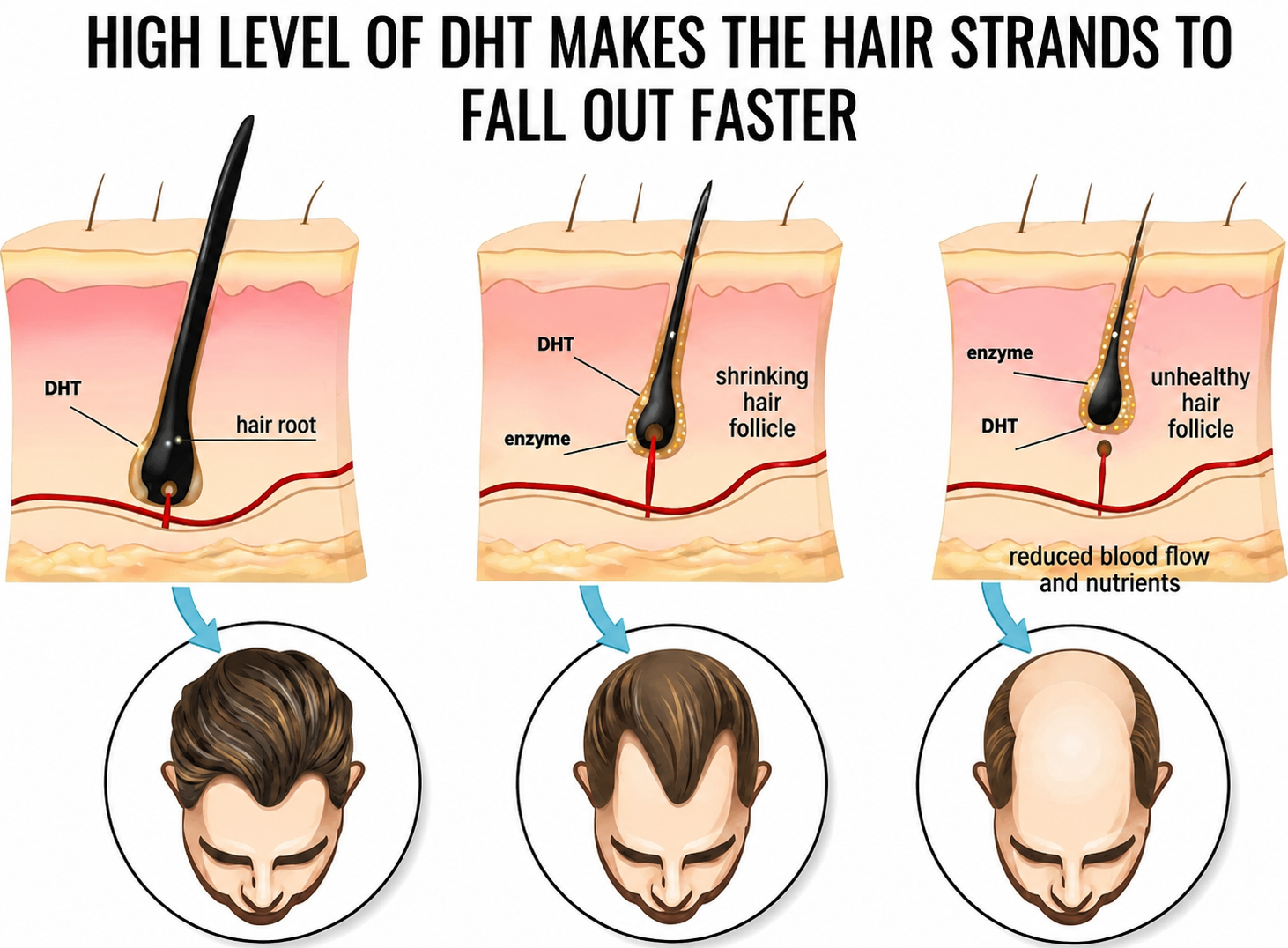
DHT (Dihydrotestosterone) is a hormone that plays a significant role in androgenetic alopecia.
In genetically susceptible individuals, DHT gradually causes hair follicles to shrink, a process known as follicular miniaturization. As a result, hair becomes thinner, weaker, and eventually stops growing altogether.
One of the reasons hair transplantation can provide long-lasting results is that donor hair is typically harvested from the back and sides of the scalp. These areas are naturally more resistant to the effects of DHT, allowing the transplanted hair to continue growing in its new location.
Hair Loss Classification Scales
Before planning a hair transplant procedure, doctors assess the severity and pattern of hair loss using internationally recognized classification systems. These scales help determine the most appropriate treatment approach, estimate the number of grafts required, and set realistic expectations regarding coverage and results.
By evaluating the stage of hair loss, specialists can create a personalized treatment plan tailored to each patient’s needs.
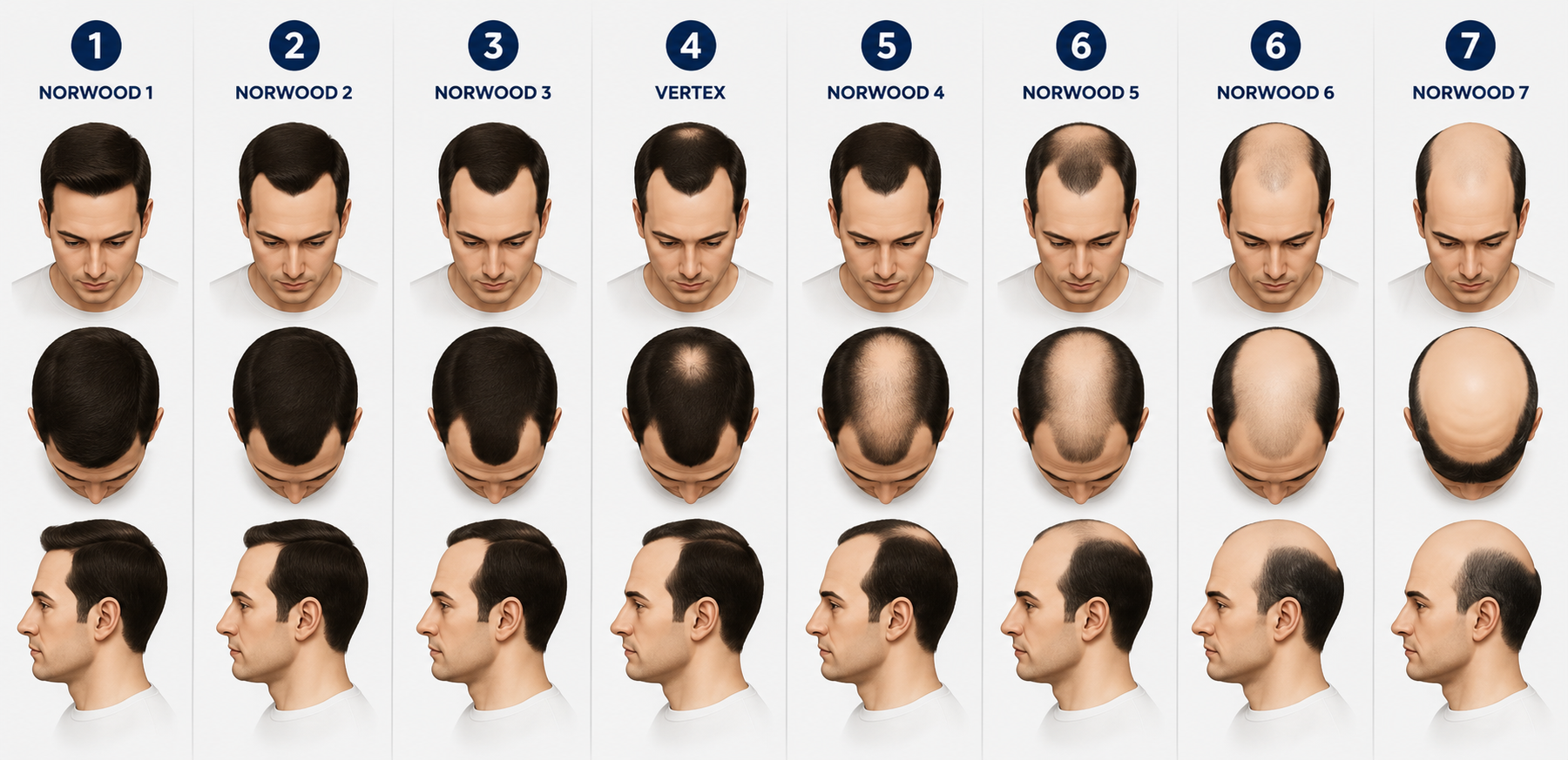
The Norwood Scale (Men)
The Norwood Scale is the most widely used system for classifying male pattern baldness. Understanding your stage of hair loss helps determine treatment options, estimate graft requirements, and set realistic expectations for coverage and results.
Norwood Stage | Hair Loss Pattern | Typical Grafts Needed | Common Treatment Goal |
Norwood 1–2 | Minimal recession | Usually not required | Monitoring & prevention |
Norwood 3 | Receding hairline and temples | 1,500–2,500 | Hairline restoration |
Norwood 4 | Frontal loss with crown thinning | 2,500–3,500 | Frontal density improvement |
Norwood 5 | Significant frontal and crown loss | 3,500–4,500 | Front-to-mid scalp coverage |
Norwood 6 | Extensive hair loss | 4,500–6,000+ | Large area restoration |
Norwood 7 | Advanced baldness | 6,000+ (multiple sessions may be required) | Maximum achievable coverage |
The Ludwig Scale (Women)
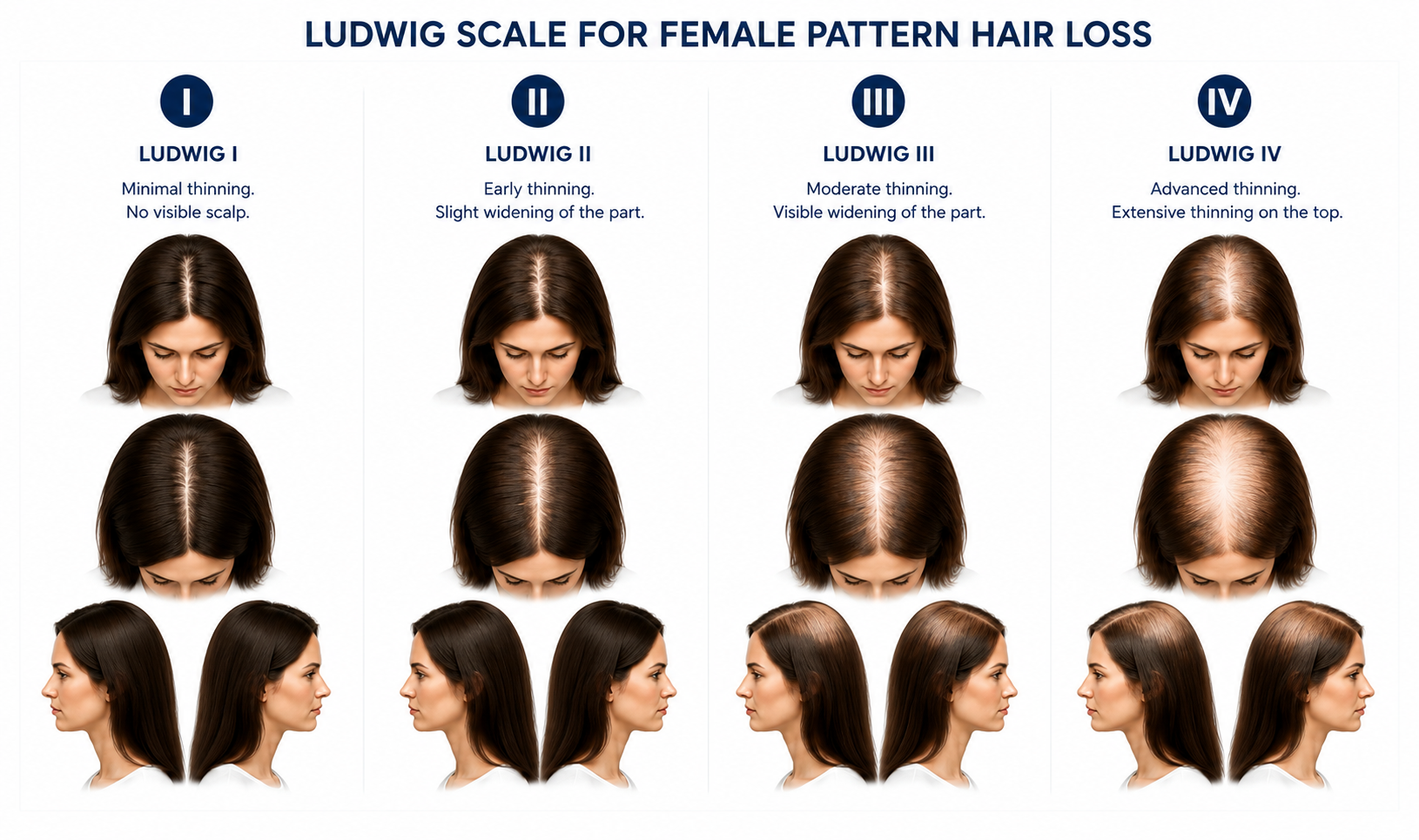
Unlike men, women typically experience diffuse thinning across the scalp rather than a receding hairline. The Ludwig Scale is the most widely used classification system for female pattern hair loss and helps specialists assess the severity of thinning and determine the most appropriate treatment approach.
Ludwig Stage | Description | Typical Treatment Approach |
Stage 1 | Mild thinning, wider part line | Medical treatments or early intervention |
Stage 2 | Noticeable thinning across the top of the scalp | Density restoration planning |
Stage 3 | Advanced diffuse thinning | Comprehensive restoration approach |
Hair Transplant Methods in Turkey
Hair transplant procedures in Turkey utilize advanced techniques designed to maximize graft survival, promote faster recovery, and achieve natural looking results. These modern methods allow surgeons to create a natural hairline while ensuring optimal density and long-term growth.
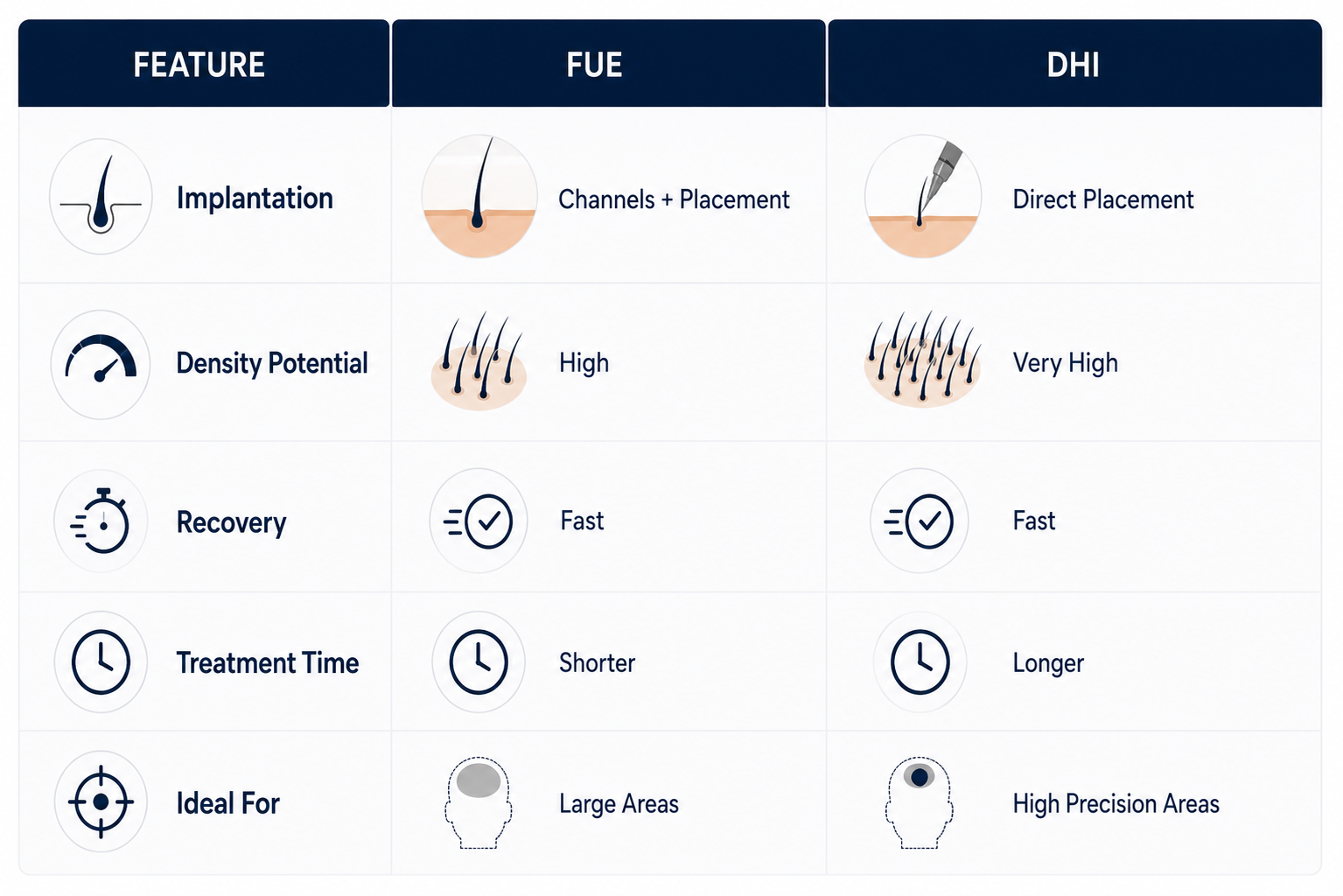
Today, DHI hair transplant turkey procedures and Turkey FUE hair transplant treatments are among the most popular hair restoration techniques. While both methods use healthy donor follicles, they differ in implantation approach, density potential, recovery timeline, and treatment planning.
FUE Hair Transplant
What Is FUE Hair Transplant?
Turkey FUE Hair Transplant procedure is performed by extracting individual follicular units from the designated donor area, and transplanting them individually into areas affected by hair loss.
FUE is now considered the global gold standard in hair transplantation because it delivers natural-looking results and minimal visible scarring.
Advantages of FUE
FUE offers several advantages that have made it one of the most popular hair transplant techniques worldwide:
Minimal scarring
Faster recovery
Suitable for large graft sessions
Natural-looking results
High graft survival rates
Who Is FUE Best For?
FUE is often recommended for who:
Have moderate to advanced hair loss
Require crown restoration
Need full head restoration
Require larger sessions of 3,000–5,000+ grafts
DHI Hair Transplant
What Is DHI Hair Transplant?
A DHI Hair Transplant Turkey utilizes a specialized implantation pen that allows grafts to be implanted directly into the recipient area without the need to pre-open channels.
This technique provides greater control over:
Angle
Direction
Depth
Density
This level of precision makes DHI an excellent option for patients seeking natural-looking results and enhanced control over hairline design and graft placement.
Advantages of DHI
DHI offers several unique benefits, including:
High-density implantation
Precise graft placement
Natural hairline design
Reduced graft handling
Excellent frontal density
Who Is DHI Best For?
DHI is frequently recommended for patients who:
Require hairline restoration
Are considering female hair transplantation
Have early to moderate hair loss
Desire higher-density results
Because of its precision and density potential, DHI is often preferred for restoring the frontal hairline and creating highly natural-looking results in visible areas of the scalp.
FUE vs DHI: Which Method Is Better?
If you’re unsure whether DHI Hair Transplant Turkey or Turkey FUE Hair Transplant is right for you, there’s no need to worry. Both techniques can deliver outstanding results when chosen for the right candidate. After a thorough consultation and assessment of your scalp, donor area, and hair restoration goals, your specialist will recommend the treatment method best suited to your needs.
Advanced Hair Restoration Treatments
In addition to hair transplantation, regenerative treatments can help enhance your results by accelerating recovery, improving graft survival, and supporting long-term hair health and growth.
Exosome Therapy
A great example of an additional regenerative treatment is exosome therapy, one of the latest innovations in hair restoration. Exosomes are microscopic signaling particles that help facilitate cellular communication and tissue repair, potentially supporting faster healing, improved graft survival, and healthier hair growth following a hair transplant.
When combined with a hair transplant in Turkey, exosome therapy may help:
Support post-op healing
Improve overall scalp health
Promote stronger and healthier hair growth
Enhance the overall recovery process
While exosome therapy does not replace hair transplantation, it can complement the procedure by supporting healing, improving scalp health, and promoting optimal hair growth in selected patients.
Stem Cell Hair Treatment
Another promising regenerative treatment is stem cell therapy, which is increasingly used in modern hair restoration. It aims to support tissue repair, improve scalp health, and enhance the overall hair restoration process.
Stem cell therapy utilizes regenerative cells and growth factors derived from the patient’s own tissue to support follicle health and encourage tissue repair. When combined with hair transplant procedure in Turkey, it may help improve healing, support graft survival, and enhance overall recovery.
Potential benefits of stem cell therapy may include:
Improved graft survival
Faster recovery
Enhanced hair quality and thickness
Increased scalp regeneration
For optimal results, stem cell therapy is often combined with FUE or DHI hair transplantation as part of a comprehensive hair restoration plan.
Are Exosome and Stem Cell Treatments Alternatives to Hair Transplantation?
For patients experiencing advanced hair loss, regenerative treatments alone are typically not enough to restore lost hair follicles or achieve significant coverage.
Instead, exosome and stem cell therapies are commonly used alongside DHI and FUE hair transplant procedures to support healing, enhance graft survival, and optimize overall treatment outcomes. When incorporated into a comprehensive hair restoration plan, these therapies can help maximize the results of hair transplantation and support long-term hair health.
Hair Transplant Cost Guide 2026
One of the most frequently asked questions by international patients is: How much does a hair transplant cost in Turkey?
The answer varies, as pricing is determined by factors such as the treatment method chosen or recommended for you, the number of grafts required, and the inclusivity of the package.
Patients researching hair transplant cost in Turkey often discover that the country offers some of the best value in the global hair restoration market, combining affordable pricing with high-quality medical care and advanced treatment options.
Hair Transplant Cost in Turkey (2026 Price Guide)
Procedure | Average Price Range |
FUE Hair Transplant | €1,800 – €3,500 |
DHI Hair Transplant | €2,000 – €4,000 |
Sapphire FUE Hair Transplant | €2,000 – €4,200 |
Female Hair Transplant | €2,000 – €4,000 |
Afro Hair Transplant | €2,500 – €5,000 |
Beard Transplant | €1,500 – €3,500 |
Eyebrow Transplant | €1,200 – €3,000 |
Hair Transplant + Exosome Therapy | €2,500 – €5,500 |
Hair Transplant + Stem Cell Treatment | €2,500 – €6,000 |
Hair Transplant Cost Comparison by Country
Many patients researching hair transplant cost in Turkey vs the USA are surprised by the substantial difference in pricing between the two countries.
Country | Average Cost |
Turkey | €1,800 – €4,500 |
United States | €8,000 – €15,000 |
United Kingdom | €6,000 – €12,000 |
Germany | €5,000 – €10,000 |
France | €5,000 – €9,000 |
Canada | €6,000 – €12,000 |
For many international patients, the lower hair transplant cost in Turkey is one of the main advantages when compared to treatment costs in the United States and Western Europe.
What Affects Hair Transplant Cost in Turkey?
The final hair transplant Turkey cost can vary significantly depending on several important factors.
Does the Number of Grafts Affect Hair Transplant Cost?
One of the most frequently asked questions from international patients is whether the number of grafts directly affects the hair transplant cost in Turkey.
In many countries, clinics often charge patients based on how many grafts they transplant.
This is especially common in the United States, Canada, and parts of Europe. As a result, larger procedures typically come with significantly higher costs.
In Turkey, pricing models can vary between clinics. Some providers charge based on the number of grafts needed. Others offer fixed-price packages with lodging, transfers, medications, and aftercare, no matter the graft count.
This is why patients researching how much does a hair transplant cost in Turkey, may encounter different pricing structures from one clinic to another.
What Affects Hair Transplant Cost in Turkey?
The final hair transplant cost in Turkey can vary significantly depending on several important factors, including the treatment technique, the number of grafts required, the surgeon’s experience, and the level of inclusivity offered within the treatment package.
Does the Number of Grafts Affect Hair Transplant Cost?
One of the most frequently asked questions among international patients is whether the number of grafts directly affects the hair transplant cost in Turkey.
In many countries, particularly the United States, Canada, and parts of Europe, clinics commonly charge patients on a per-graft basis. As a result, larger procedures often come with significantly higher costs.
In Turkey, however, pricing models can vary between clinics. Some providers charge according to the number of grafts required, while others offer fixed-price packages that may include accommodation, airport transfers, medications, and post-operative care regardless of the graft count.
For this reason, patients researching how much does a hair transplant costs in Turkey often encounter different pricing structures from one clinic to another.
Typical Graft Requirements by Hair Loss Stage
Hair Loss Level | Typical Grafts Needed |
Mild Hair Loss | 1,500 – 2,500 |
Moderate Hair Loss | 2,500 – 4,000 |
Advanced Hair Loss | 4,000 – 6,000+ |
Patients experiencing advanced hair loss frequently search for the 5000 grafts hair transplant cost in Turkey, as procedures involving 5,000 grafts are often recommended for extensive hair loss, including significant frontal recession and crown restoration.
While the final cost of a 5000 grafts hair transplant cost Turkey depends on factors such as the clinic, treatment method, and package inclusions, the number of grafts required remains one of the most important factors influencing the overall cost of hair transplant cost in Turkey.
Hair Transplant Method
The selected treatment technique can also affect the final Turkey hair transplant cost.
Procedures such as:
FUE Hair Transplant
DHI Hair Transplant
Sapphire FUE
Exosome Therapy
Stem Cell Hair Treatment
may differ in complexity, procedure duration, and overall pricing.
Hair Type and Treatment Area
The treatment area and hair characteristics can also influence pricing.
Some procedures require additional planning and specialized expertise, including:
Female Hair Transplant
Afro Hair Transplant
Beard Transplant
Eyebrow Transplant
As a result, treatment costs may vary depending on the patient’s hair characteristics, restoration goals, and the overall complexity of the procedure.
Medical Team Experience
Patients comparing how much a hair transplant costs in Turkey should consider overall treatment quality rather than focusing solely on price.
The experience of the medical team, individualized treatment planning, safety standards, and aftercare support all contribute to the overall value of treatment.
What’s Included in the Package?
Many international patients prefer all-inclusive packages that may include:
Accommodation
VIP airport transfers
Interpreter support
Medications
Aftercare products
Follow-up consultations
These additional services can influence the overall hair transplant cost in Turkey while making the patient journey significantly more comfortable, convenient, and stress-free.
Hair Transplant Turkey Before and After Results
When researching a hair transplant in Turkey, one of the first things patients look for is real patient results. Reviewing before and after photos can help set realistic expectations and demonstrate what modern hair restoration techniques can achieve.
Although every patient is unique, successful procedures typically feature a natural-looking hairline, improved density, and long-term graft survival. For this reason, Turkey hair transplant before and after galleries are an invaluable resource, allowing patients to compare clinics, evaluate treatment quality, and better understand potential treatment outcomes.
What Results Can You Expect From a Hair Transplant in Turkey?
Modern techniques such as FUE and DHI can deliver natural-looking, long-lasting results when performed by experienced medical teams.
Many patients review before and after comparisons to evaluate:
Hairline restoration
Density improvement
Crown coverage
Temple reconstruction
Overall facial framing
The final outcome depends on several factors, including donor area quality, hair characteristics, graft count, and the progression of future hair loss.
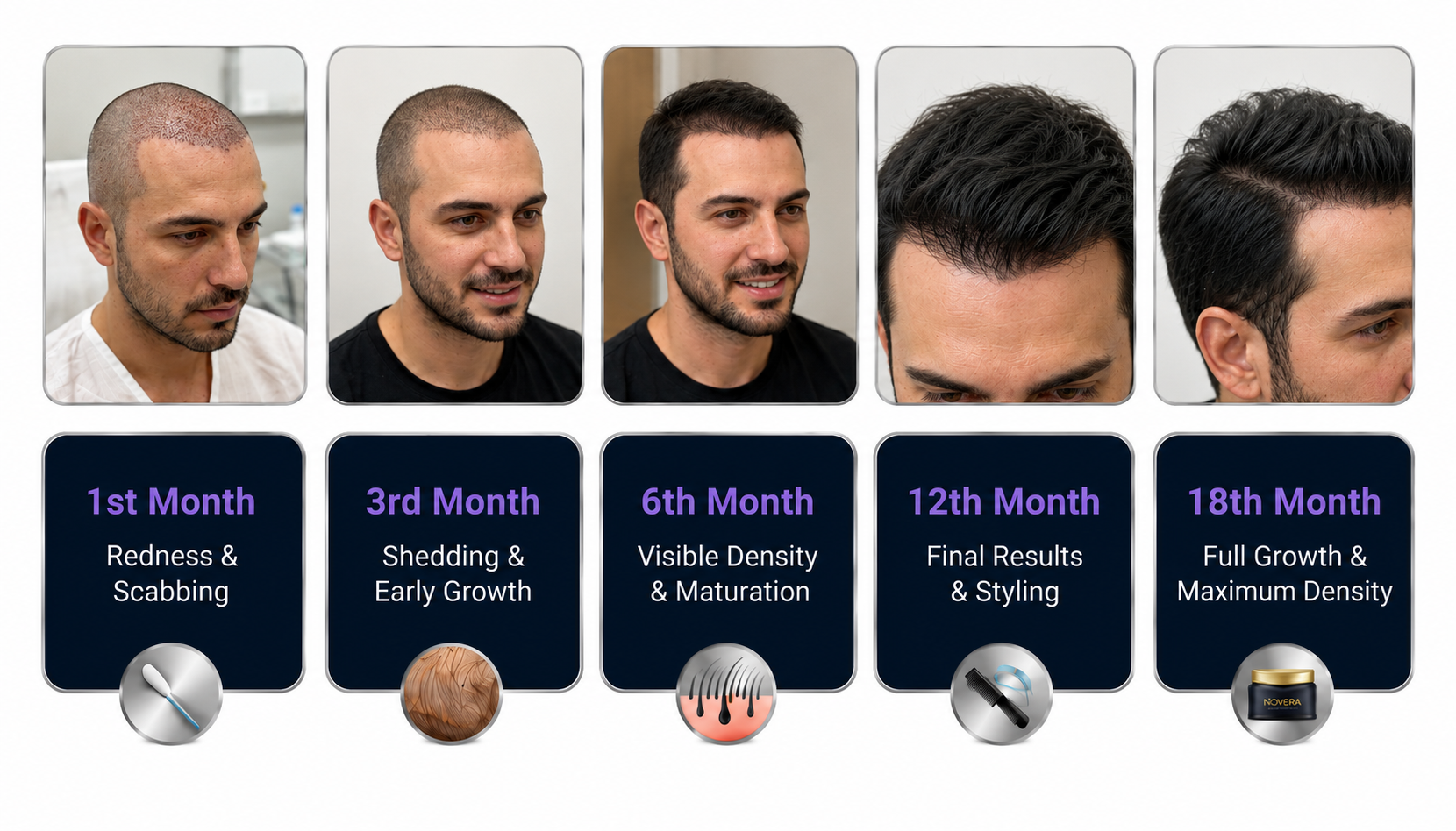
Hair Growth Timeline After a Hair Transplant
One of the most common questions patients ask after viewing Turkey hair transplant results is how long it takes to achieve the final outcome.
First Month
Transplanted grafts settle into place
Temporary shedding (shock loss) may occur
The healing process continues
Months 2–4
New hair growth begins
Early improvements in density become visible
Months 5–8
Significant growth phase
Increased thickness and coverage
Months 9–12
Most patients see the majority of their final results
Hair appears fuller and more natural
Months 12–18
Final maturation phase
Maximum density and texture improvements occur
Factors That Influence Hair Transplant Results
Not all hair transplant Turkey before and after results are identical. Outcomes can vary depending on several important factors.
Hair Characteristics
Hair thickness
Hair color
Hair texture
Curl pattern
Donor Area Quality
A strong donor area generally allows for greater coverage, higher density, and improved overall results.
Number of Grafts
Patients requiring extensive restoration may need:
2,000 grafts
3,000 grafts
4,000 grafts
5,000+ grafts
to achieve their desired level of coverage.
Hair Transplant Method
Both DHI and FUE hair transplant techniques can produce excellent outcomes when selected appropriately for the patient’s needs.
Before and After Gallery
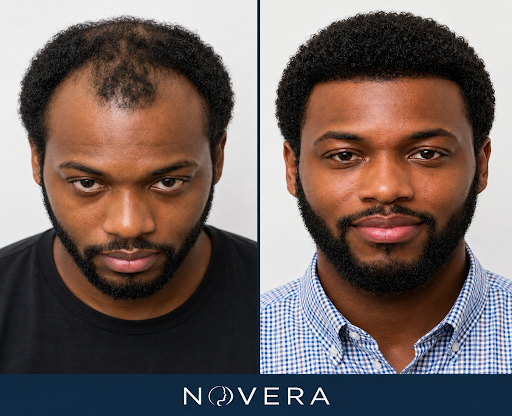
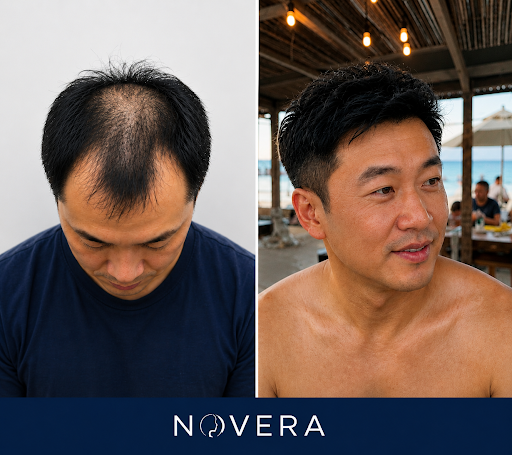
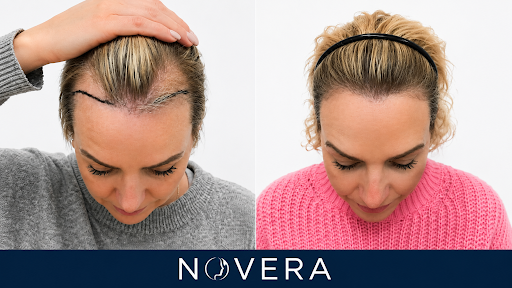
Authentic hair transplant Turkey before and after photos help patients set realistic expectations and gain insight into a clinic’s experience, surgical approach, and treatment quality.
When reviewing before and after galleries, patients should look for:
- Natural-looking hairlines
- Consistent density across treated areas
- Cases with similar hair loss patterns
- Long-term results and follow-up images
- High-quality, standardized photography
Rather than focusing on a single dramatic transformation, it is important to review multiple patient cases. This provides a more realistic understanding of the results that can be achieved and helps
Real Patient Results by Hair Loss Stage
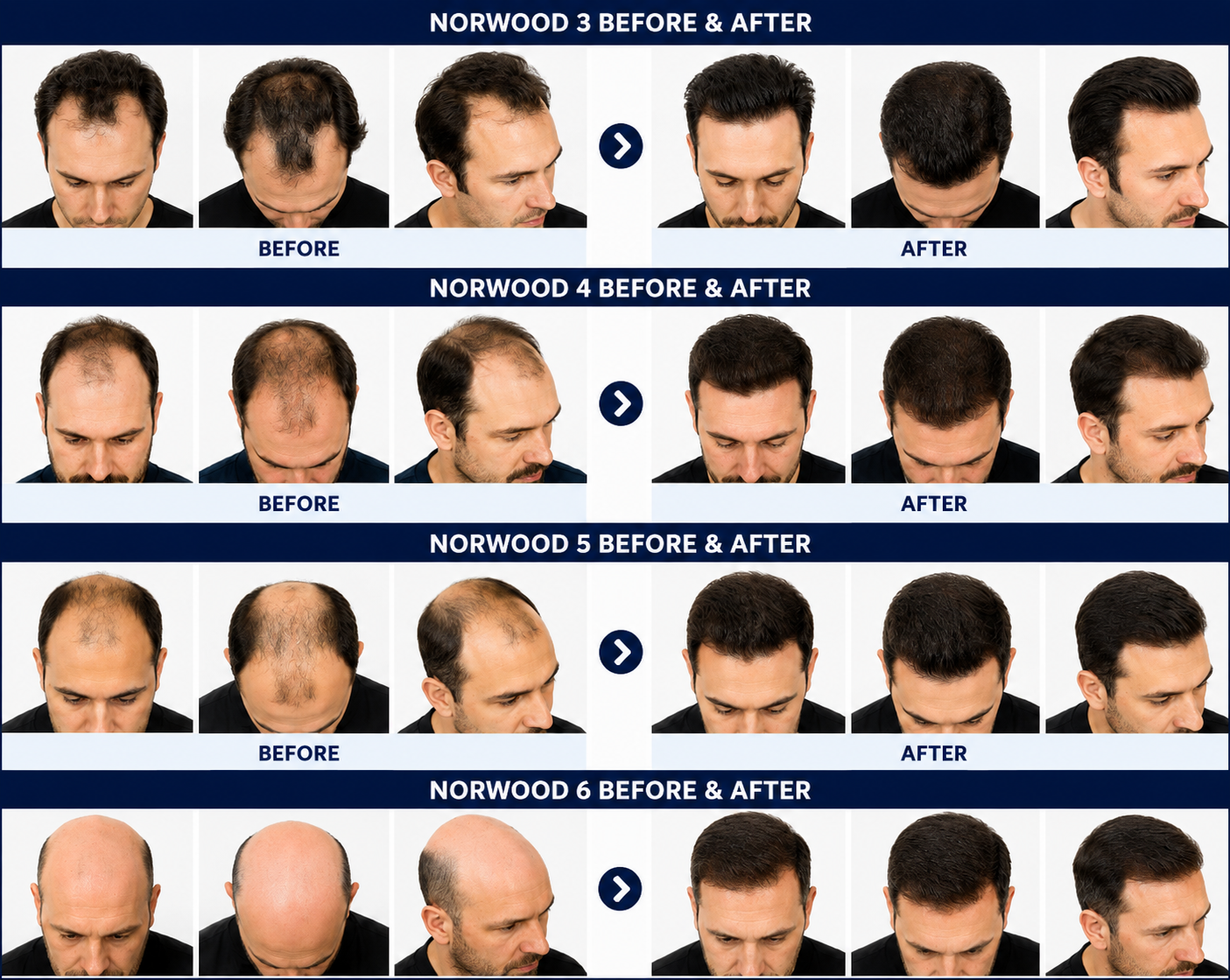
Because treatment goals and expected coverage vary depending on the severity of hair loss, reviewing cases from different stages can help patients better understand potential outcomes.
Patients with similar Norwood classifications often achieve comparable coverage goals, making stage-specific before and after examples particularly valuable during the research process.
Norwood 3-4-5-6 Before & After
Hair Transplant Packages in Turkey
Patients researching hair transplant in Turkey package are often looking for more than just the procedure itself. One of the reasons Turkey has become a global leader in medical tourism is the availability of comprehensive treatment packages designed specifically for international patients.
Many clinics offer all-inclusive packages that combine treatment, accommodation, transportation, and patient support services, making the overall experience more convenient, organized, and predictable.
Whether you are considering a standard hair transplant Turkey package or searching for a Turkey hair transplant package with flight, understanding exactly what is included can help you choose the option that best suits your needs and budget.
What’s Included in a Hair Transplant Package in Turkey?
Although package contents vary between providers, most options typically include:
Hair transplant procedure
Pre-treatment consultation
Personalized treatment planning
Medications
Aftercare products
Follow-up support
Many clinics also include accommodation and transportation services to simplify the patient journey from arrival to departure.
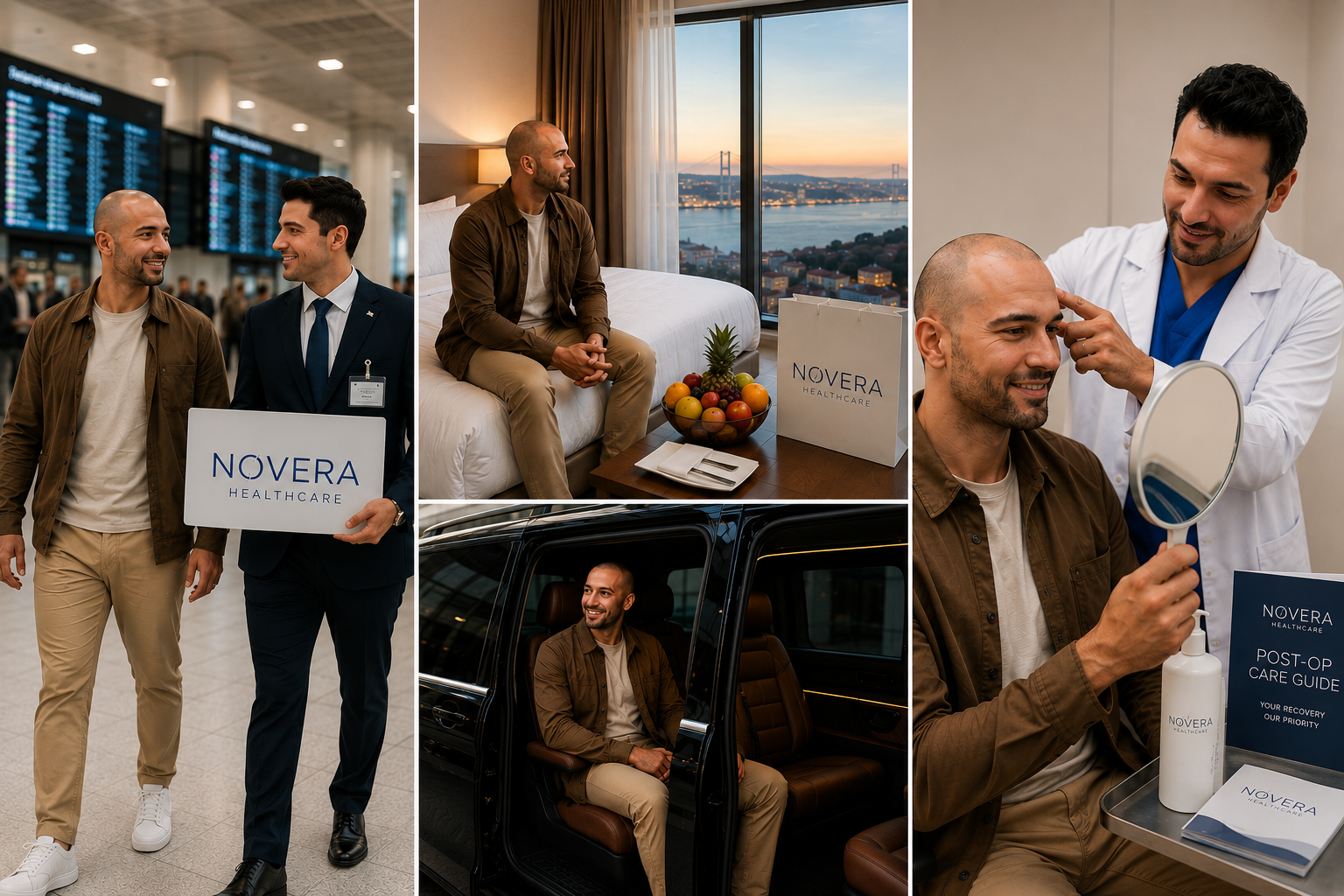
Hotel Accommodation
One of the biggest advantages of choosing an all-inclusive hair transplant Turkey package is the inclusion of hotel accommodation.
Most international patients stay in Turkey for 2–4 nights, depending on their treatment plan and recovery requirements.
Accommodation is commonly provided in:
4-star hotels
5-star hotels
Boutique hotels
Partner accommodation facilities
This allows patients to focus entirely on their treatment and recovery without having to arrange lodging separately.
Airport Transfers and Local Transportation
Transportation is another important component of many hair transplant in Turkey package deals.
Services may include:
Airport pick-up
Airport drop-off
Hotel-to-clinic transfers
Private VIP transportation
For international visitors unfamiliar with the city, these services help create a smoother, safer, and more comfortable experience.
Interpreter Support
Many patients traveling abroad do not speak Turkish.
For this reason, premium hair transplant Turkey package deals often include multilingual patient coordinators and interpreter services.
Support is commonly available in:
English
German
French
Spanish
Arabic
Russian
Clear communication throughout the treatment journey helps patients feel informed and confident at every stage.
Aftercare Support
A successful hair transplant does not end when the procedure is completed.
Comprehensive aftercare is an essential component of many hair transplant in Turkey package deals may include:
Post-operative instructions
Follow-up consultations
Recovery monitoring
Hair washing guidance
Long-term treatment recommendations
Ongoing support helps patients maximize graft survival and achieve the best possible results.
Turkey Hair Transplant Package With Flight
Some providers offer a Turkey hair transplant package with flight that combines treatment, accommodation, transportation, and travel arrangements into a single solution.
These packages can be particularly appealing to patients traveling long distances, as they reduce planning time and provide additional convenience throughout the medical journey.
However, package inclusions vary between clinics. Patients should always confirm exactly what is covered before making a final decision.
Frequently Asked Questions
Hair Transplant in Turkey
It really comes down to a great mix of quality and value. Turkey has become a global hub for hair restoration because it offers highly experienced medical teams, state-of-the-art techniques (like FUE and DHI), and comprehensive care packages—all at a very competitive price.
Absolutely! It is widely recognized as a top choice. People from all over the world travel to Turkey specifically for the experienced specialists, modern clinics, and all-inclusive treatment packages that make the whole process smooth and stress-free.
It’s a reputation built over years of high success rates. Clinics here perform a massive volume of procedures, which means surgeons have incredible hands-on experience. Add in advanced methods, affordable pricing, and fantastic support for international travelers, and it’s easy to see why it stands out.
For most international patients, yes—it offers an unbeatable balance of quality, affordability, and convenience. Just remember that the ultimate “worth” depends on choosing the right clinic. A skilled medical team, a personalized treatment plan, and solid aftercare are what make the trip truly worthwhile.
They are very safe, provided you choose a reputable, licensed clinic. Just like anywhere else in the world, the key is doing your research. Always look into the clinic’s hygiene standards, the medical team’s credentials, and their post-op care protocols before booking.
Cost & Packages
The exact price depends on a few factors—like the number of grafts you need, the specific technique used, the surgeon’s experience, and what’s included in your package. Generally, you can expect a quality procedure to range between €1,800 and €4,500.
You’ll often find that prices in Turkey are significantly lower than in the US, the UK, and much of Europe. The best part is that this lower cost doesn’t mean compromising on quality—you still get access to world-class medical teams.
It’s mostly due to lower local operational costs and a very supportive medical tourism sector. Plus, because clinics perform such a high volume of procedures, they can afford to keep their prices competitive without cutting corners.
It can, but it depends on the clinic. While many Western countries charge strictly per graft, a lot of Turkish clinics offer fixed-price packages. That said, massive procedures requiring significantly more time and complex planning might still push the cost up a bit.
If you need around 5,000 grafts, you’re likely looking at treating moderate to advanced hair loss. Because extracting and placing that many grafts takes a lot of time and expertise, these procedures usually sit at the higher end of the standard price range.
Most clinics try to make your trip as hassle-free as possible. A typical all-inclusive package covers your initial consultation, the procedure itself, hotel accommodation, VIP airport transfers, a personal interpreter, your post-op medications and special shampoos, plus follow-up check-ins.
Candidacy & Planning
It might be, if you have permanent hair loss, enough healthy donor hair (usually at the back of the head), and realistic expectations about the results. The best way to know for sure is to have a professional consultation to assess your unique hair loss pattern.
While there isn’t a strict age limit, specialists usually recommend waiting until your hair loss pattern has stabilized (often in your late 20s or 30s). Getting a transplant too young, while you are still actively losing hair, can sometimes lead to unnatural-looking results down the road. Careful, long-term planning is key.
Absolutely. Hair transplants are a great option for women looking to restore density, fill in thinning areas, or lower and correct their hairline. It just requires a careful evaluation to make sure you’re a good candidate.
This is totally unique to you! It depends on your stage of hair loss, the health of your donor area, and how dense you want the final look to be. Minor tweaks might only need 2,000–3,000 grafts, while advanced hair loss could require upwards of 4,000 to 6,000+ grafts.
Take your time to weigh a few important things: the clinic’s track record, the experience of the medical team, the quality of your own donor hair, and the clinic’s before-and-after gallery. Also, make sure they are transparent about costs, offer solid aftercare, and discuss how your natural hair loss might progress in the future.
Most clinics try to make your trip as hassle-free as possible. A typical all-inclusive package covers your initial consultation, the procedure itself, hotel accommodation, VIP airport transfers, a personal interpreter, your post-op medications and special shampoos, plus follow-up check-ins.
Methods & Procedure
Neither is universally “better”—it’s all about what your specific hair needs! Both deliver incredibly natural results. FUE is generally fantastic for covering larger areas of baldness, while DHI is often preferred for packing in high density or doing very precise hairline work without shaving the entire head.
Sapphire FUE is an advanced twist on the traditional FUE method. Instead of standard steel blades, the surgeon uses blades made from precious sapphire to create the tiny channels where your new hair will go. Because these blades are so sharp and smooth, they allow for very precise placement, less tissue trauma, and often a faster healing process.
PRP is a great supportive treatment. A small sample of your own blood is drawn to isolate the growth-factor-rich plasma, which is then applied to your scalp. It helps boost scalp health, speeds up healing, and gives your new grafts the best possible environment to thrive.
You shouldn’t feel pain during the actual surgery because it is done under local anesthesia. The most uncomfortable part is usually just the initial numbing injections. Afterward, you might feel some mild soreness or tightness during the first few days of recovery, but it’s very manageable.
Yes, almost always. The local anesthesia numbs your scalp completely, keeping you comfortable and awake throughout the whole process. You can even read, watch a movie, or take a nap!
It’s a full-day commitment. Most procedures take anywhere from 6 to 10 hours. The exact time depends on how many grafts you need and the specific technique being used.
Recovery, Side Effects & Results
You can expect some temporary side effects like mild swelling, redness, scabbing, and itching around the treated areas. Don’t worry, though—this is all completely normal and usually clears up within the first week or two of healing.
Yes, and this catches a lot of people off guard! It’s completely normal to experience “shedding” a few weeks after your procedure. The hair shafts fall out, but the newly planted follicles remain securely under the skin. Your new, permanent hair will start growing from those follicles in a few months.
Shock loss is a temporary shedding of your existing or newly transplanted hair due to the mild trauma of the surgery. It can be startling, but it’s a standard part of the recovery cycle. Once the hair rests, new growth will naturally begin.
Modern techniques like FUE and DHI are specifically designed to keep scarring to an absolute minimum. Because they use tiny extraction punches, the small, dot-like marks in the donor area heal very well and become virtually undetectable once your hair grows out a bit.
Patience is key here! You’ll usually spot the first signs of new growth around months 3 or 4. By months 6 to 9, you’ll start to see a very noticeable cosmetic improvement. However, the true, final result—when the hair fully matures and thickens—usually takes about 12 to 18 months.
Yes! The transplanted hair is taken from the back and sides of your head, which are genetically resistant to the hormone (DHT) that causes hair loss. So, those new hairs are there to stay. Keep in mind, though, that your original (non-transplanted) hair can still thin out over time.
Very high. When you’re a good candidate and your procedure is done by an experienced team using modern techniques, the graft survival rate is typically above 90%.
Aftercare & Daily Life
The most important thing is following your clinic’s post-op instructions to the letter. You’ll need to avoid touching or scratching the grafts, sleep with your head elevated to reduce swelling, protect your scalp from the sun, and make sure to attend your follow-up check-ups.
You’ll usually start washing your hair a couple of days after the surgery, but it requires a very gentle touch. Your clinic will provide you with a specific lotion and shampoo protocol. The golden rule is to pat and rinse gently—absolutely no rubbing or scrubbing, as you don’t want to dislodge the new grafts.
If you work in an office or from home, you can usually jump back in within a few days. However, if your job involves heavy lifting, wearing a hard hat, or lots of physical activity, you’ll want to take a bit more time off to protect your healing scalp.
Give yourself a well-deserved break! Most doctors advise avoiding the gym and any intense exercise for about 10 to 14 days. You want to avoid heavy sweating, high blood pressure to the head, or any risk of bumping your scalp while the grafts are setting.
Not always; it really depends on the technique and your specific treatment plan. While many procedures do require shaving the donor area for the best access, certain cases can be done with partial shaving or even completely unshaven techniques. Your doctor will discuss the best approach for you.
You definitely need to let your medical team know about any prescription meds, over-the-counter drugs, or supplements you take. They’ll give you clear instructions on what is safe to keep taking and what you should pause before surgery.
Yes, this is highly recommended. You should aim to avoid or significantly reduce both smoking and alcohol before and right after your procedure. Both can restrict blood flow and interfere with the healing process, which can directly affect the survival of your new grafts.
Travel & Istanbul
A quick trip is usually all you need! Most patients stay in Istanbul for 2 to 4 nights. That gives you enough time for your pre-op consultation, the procedure itself, a day of rest, and your first clinical hair wash before you fly home.
Not really—clinics operate year-round. The “best” time is entirely up to you. Just factor in your work schedule, travel plans, and when you can comfortably wear a loose hat or stay low-key during those first couple of weeks of recovery.
It’s easier than you might think. The process usually kicks off with an online consultation where you send in some photos of your hair. Once the team evaluates your case and draws up a treatment plan, you’ll choose a procedure date. From there, your coordinators handle the heavy lifting—booking your accommodation, arranging airport transfers, and setting up your aftercare plan.
